
Introduction: What Is a Hackathon?
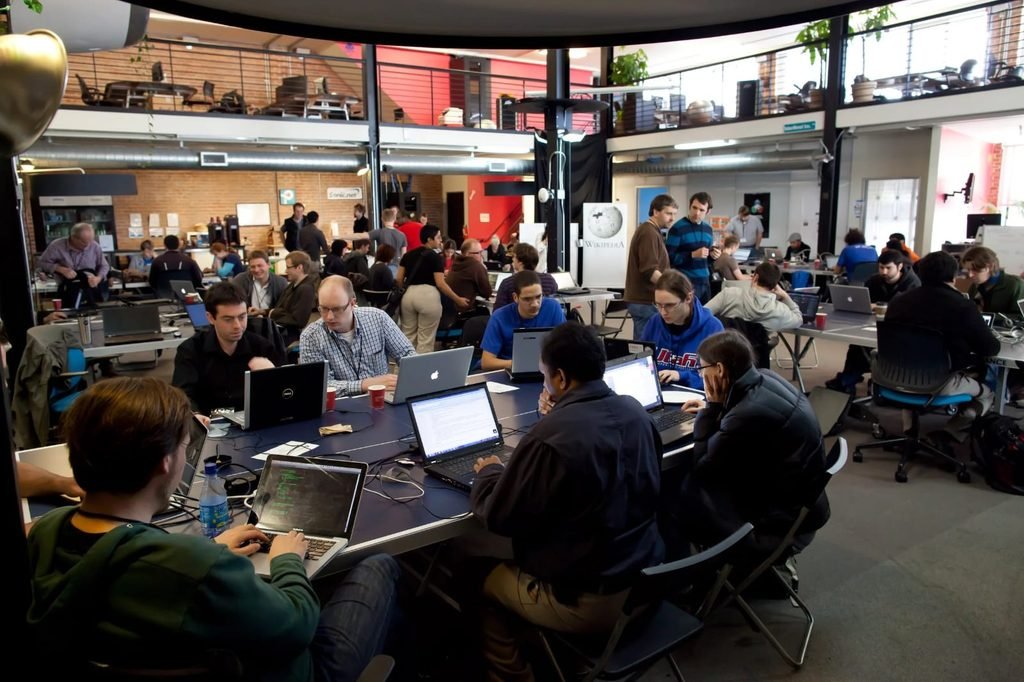
A hackathon is a time-limited event where people come together to solve problems, develop ideas, and build prototypes or other practical solutions. Although many hackathons involve software and technology, modern events can also include hardware, design, research, data analysis, business planning, public policy, and social-impact projects.
The basic idea is simple: give participants a problem or theme, bring together people with different skills, set a limited amount of time, and encourage them to work together toward a tangible result. Participants may form teams, research a problem, design a solution, build a prototype, test it, and present their work to judges or an audience.
Hackathons are organized by universities, technology communities, companies, governments, nonprofit organizations, and other groups. Some focus on learning and experimentation, while others are designed around innovation, open data, entrepreneurship, community problems, or organizational challenges.
What makes a hackathon different from an ordinary project is its combination of collaboration, time pressure, experimentation, and rapid development. Participants usually do not have enough time to create a complete commercial product. Instead, they concentrate on demonstrating an idea and showing how it could work in practice. IBM, for example, describes hackathons as events that bring people together to solve problems creatively and quickly, often around a defined theme or problem statement.A successful hackathon is therefore not simply about writing code. It is about taking a problem from an idea to an early-stage solution through teamwork.
What Does the Word “Hackathon” Mean?
The word hackathon combines the words “hack” and “marathon.”
In this context, “hack” does not mean breaking into a computer system or carrying out illegal activity. It generally refers to experimenting, building, modifying, and finding practical ways to solve a problem. The “marathon” part reflects the concentrated period of work during which participants try to make significant progress.The meaning has become broader over time. A hackathon can involve programmers, but it can also involve designers, entrepreneurs, researchers, writers, business specialists, engineers, students, and subject experts.
Major League Hacking describes a hackathon as an “invention marathon” in which people come together to learn, build, and share their creations. It also emphasizes that hackathons are not limited to computer science students.
This distinction is important because the word “hacking” has multiple meanings. In cybersecurity, hacking can refer to attempts to access or manipulate computer systems. In the word “hackathon,” however, the term is normally used in the sense of rapid, creative problem-solving and development.

How Hackathons Developed Over Time
Hackathons have their roots in the software-development community, but their history is broader than many people realize.
OpenBSD officially records a June 1999 gathering in Calgary, Canada, as the first hackathon. According to the OpenBSD project, developers from different parts of the world came together to work intensively on the operating system. The project also says the word “hackathon” had been coined in the months leading up to the event, although it notes that either Theo de Raadt or Niels Provos may have coined it. The event focused heavily on writing and integrating code quickly.
In the early years, hackathons were strongly associated with software development and open-source projects. Developers could work face-to-face with people who normally lived in different cities or countries. This made it easier to discuss problems, make decisions, test ideas, and integrate changes rapidly.
Over time, the format expanded beyond traditional software development. Hackathons began to include mobile applications, websites, hardware, data visualization, design, entrepreneurship, public services, education, and social challenges.
NASA’s International Space Apps Challenge, launched in 2012, is an important example of this broader approach. NASA described the event as a worldwide competition in which participants used openly available space-related data to create solutions to global challenges. Its early events included participants from locations across different continents as well as Antarctica and the International Space Station.By 2021, NASA reported that Space Apps had grown from 25 local events in 17 countries in 2012 to more than 250 local events in 87 countries and territories, with thousands of participants working across disciplines.

The history of hackathons therefore shows a gradual transformation: what began primarily as an intensive software-development gathering became a flexible format for collaboration, experimentation, and problem-solving across many fields.
How a Hackathon Works
There is no single universal format for a hackathon. The duration, team size, theme, eligibility rules, project requirements, judging system, and prizes can all be different.However, many hackathons follow a broadly similar process.
- Registration and Orientation: Participants first register for the event. Organizers usually explain the theme, rules, schedule, available resources, submission requirements, and judging criteria.
- Problem Selection: Some hackathons provide a fixed list of challenges. Others allow participants to identify their own problem as long as it fits the event’s theme.
- Team Formation: Participants may work individually or create teams. Teams often combine people with different abilities so that technical, design, research, business, and presentation tasks can be shared.
- Idea Development: Teams discuss the problem they want to solve, research existing approaches, identify the main users or beneficiaries, and decide what solution they can realistically build within the available time.
- Building a Prototype: The team then creates a prototype. A prototype might be an application, website, hardware device, data visualization, demonstration model, or other early version of a solution.
- Testing and Improvement: The prototype is tested to identify errors, usability problems, missing features, or weaknesses in the original idea.
- Submission and Presentation: At the end of the event, teams submit their project according to the rules. They may then give a presentation or live demonstration to judges.
- Judging: Judges evaluate projects according to criteria established by the organizers. Common factors can include technical implementation, design, usability, impact, originality, feasibility, and the quality of the demonstration.
The exact process depends on the particular event. Some hackathons last a few hours, while others operate across a day, a weekend, or longer periods. Some are entirely online, while others are conducted in person or use a hybrid format.
Common Types of Hackathons
Hackathons can be organized in many different ways depending on their purpose.
- Student and University Hackathons: These events are designed for students and are often focused on learning, experimentation, networking, and building projects. Participants may create websites, mobile applications, hardware projects, games, or solutions to specific social and technical problems.
- Corporate Hackathons: Companies may organize internal hackathons to encourage employees to experiment with new ideas, explore product concepts, solve technical challenges, or investigate improvements to existing services.
- Community Hackathons: Community-based events can focus on local problems and public needs. Participants may work on transport, accessibility, education, public information, environmental issues, or other community concerns.
- Open Innovation Hackathons: These invite participants to explore challenges that an organization or community has identified but has not yet fully solved. The objective is often to bring in perspectives from people outside the organization.
- Hardware Hackathons: Hardware hackathons involve physical devices, sensors, electronics, robotics, or other equipment. Such projects can require prototyping, testing, and physical construction in addition to software development.
- Software Hackathons: These focus primarily on software such as websites, mobile applications, APIs, games, cybersecurity tools, data platforms, or developer tools.
- Social-Impact and Public-Sector Hackathons: These use the hackathon format to address public or social challenges. NASA’s International Space Apps Challenge is one example of a large-scale event using public data to encourage solutions to challenges on Earth and in space.
These categories can overlap. A single hackathon might involve software, hardware, business planning, data analysis, and social impact at the same time.
Who Can Participate in a Hackathon?
Hackathons are often associated with programmers, but participants can come from many backgrounds.
A software developer might build the technical system. A designer can work on the user interface. A researcher may investigate the problem and evaluate information. A business student might study the market or explain how the idea could be implemented. A communications specialist could help prepare the final presentation.
Engineers can contribute technical and hardware knowledge, while entrepreneurs can help think about customers, costs, and possible business models. Teachers, healthcare professionals, environmental specialists, farmers, policy researchers, and other subject experts can also contribute when a hackathon is focused on a particular industry or social issue.
NASA explicitly states that its Space Apps Challenge welcomes coders, scientists, designers, storytellers, makers, technologists, and innovators from different backgrounds and skill levels.Therefore, a person does not necessarily need advanced programming knowledge to participate. The most useful skill depends on the problem being addressed.
For beginners, participation can also be a learning experience. A person may join a team initially in a non-technical role and gradually develop technical skills by working alongside others.
How Teams Work Together During a Hackathon
Teamwork is one of the central features of a hackathon.
At the beginning, teams need to decide what problem they are solving and what they can realistically achieve. Without a clear goal, teams can spend too much time discussing possibilities and too little time building.Different members can take responsibility for different parts of the project. One person may conduct research, another may develop software, another may design the interface, and another may prepare the presentation. However, responsibilities often overlap.
Good communication is especially important because hackathons operate under time pressure. Team members need to share progress, identify problems quickly, and adjust their plans when something does not work.
A diverse team can bring different ways of thinking to the same problem. Someone with strong technical skills may focus on whether the project can be built, while someone with subject knowledge may notice whether the proposed solution actually addresses the user’s needs.
The goal is not simply to divide work into separate pieces. The team needs to keep the entire project connected so that the final solution is understandable and usable.

From Idea to Prototype: The Hackathon Process
The journey from an idea to a working prototype is often the most important part of a hackathon.
- Identifying the Problem: Teams first need to understand what problem they are trying to solve. A strong project generally starts with a clear problem rather than with a technology looking for a purpose.
- Researching the Problem: Teams may investigate existing solutions, talk about the target users, examine available data, identify limitations, and determine what has already been attempted.
- Developing the Idea: Once the problem is understood, the team proposes a solution and identifies its most important features.
- Building a Minimum Prototype: A prototype does not need to contain every possible feature. Instead, it should demonstrate the central idea.
For example, a transport project might not need a complete nationwide transport platform. A basic prototype showing how users could find routes or report delays may be enough to demonstrate the concept. - Testing: The prototype should be tested as much as time permits. Testing may reveal bugs, confusing interfaces, incorrect assumptions, or technical limitations.
- Preparing the Demonstration: Finally, the team explains the problem, its proposed solution, how the prototype works, and why it could be useful.
The emphasis on prototypes is important because hackathons are usually short. Attempting to build a complete commercial product in a limited period is often unrealistic. A focused prototype allows the team to demonstrate feasibility while leaving room for further development later.

Skills That Help Participants Succeed
Technical knowledge can be useful, but hackathons require a much wider collection of skills.
- Problem-solving helps teams understand complex challenges and identify practical approaches.
- Communication helps members explain their ideas and coordinate their work.
- Teamwork is essential because the project is often too large for one person to complete within the available time.
- Time management becomes particularly important as the deadline approaches.
- Research skills help participants understand the problem, identify relevant information, and avoid building something based on incorrect assumptions.
- Design skills can improve usability and make the final product easier to understand.
- Project planning helps the team decide which features are essential and which can be left for later.
- Presentation skills matter because even a technically interesting project may be difficult for judges or users to understand without a clear explanation.
- Technical abilities such as programming, electronics, data analysis, web development, mobile development, or system design may be required for some projects, but not all hackathons require the same technical skills.
- The strongest teams often combine technical and non-technical abilities rather than depending entirely on one type of expertise.
How Hackathons Encourage Innovation
Hackathons can create an environment in which experimentation happens quickly.
One reason is the limited time available. Participants cannot spend months planning every detail before beginning. They usually have to make decisions, test assumptions, and respond to problems quickly.
Another factor is collaboration. People who normally work or study in different areas may bring different ideas to the same challenge.
Hackathons can also reduce the distance between an idea and an experiment. Instead of discussing a concept only in theory, a team can build a basic prototype and discover whether the idea works.
This does not mean every hackathon produces an entirely new invention. Innovation can also mean finding a new application for existing technology, combining familiar tools in a different way, simplifying an existing process, or adapting an idea to a new group of users.
IBM describes hackathons as a way of bringing diverse talent together to solve problems creatively and rapidly. NASA’s Space Apps model similarly demonstrates how shared data and multidisciplinary collaboration can be used to explore solutions to global challenges.
Benefits of Hackathons for Students and Professionals
Hackathons can provide practical experiences that are difficult to reproduce through theory alone.
For students, they can offer opportunities to work on projects, cooperate with people from different backgrounds, practice presenting ideas, and experience the pressure of a real deadline.
Research into hackathon-based learning suggests that such events can provide opportunities to practice collaboration, problem-solving, critical thinking, and other skills. However, a 2024 systematic literature review also found that evidence about learning outcomes is not yet standardized and that many studies rely heavily on participants’ own perceptions of learning. This means hackathons can support learning, but their educational value should not be assumed to be automatic.
Professionals can benefit from exposure to new technologies, new perspectives, interdisciplinary collaboration, and opportunities to explore ideas outside normal job routines.
Other potential benefits include:
- practical project experience;
- networking with participants, mentors, and organizers;
- portfolio material;
- opportunities to receive feedback;
- experience working under a deadline;
- practice communicating technical ideas to non-technical audiences;
- exposure to real-world problems.
However, participation in a hackathon does not automatically result in employment, investment, academic success, or business success. The outcome depends on the participant, the event, the quality of the project, and what happens afterward.
How Hackathons Help Startups and Organizations
Organizations can use hackathons to explore ideas that may not fit easily into their normal development processes.
A company may use a hackathon to investigate a new product concept, experiment with a technology, improve an internal process, or encourage employees to explore problems from a different perspective.
Hackathons can also help organizations identify people with particular technical, creative, leadership, or teamwork abilities. They can provide an environment where participants demonstrate skills by actually building something rather than only describing what they can do.
For startups and entrepreneurs, a hackathon can be a starting point for testing an idea. A prototype may help a team discover whether a problem is worth solving and whether people are interested in the proposed solution.
However, hackathons are not substitutes for long-term research, product development, customer testing, regulatory review, security testing, manufacturing, funding, or operational planning.
A prototype that works during a weekend may still require months or years of additional development before it can become a reliable product or service.
The most valuable outcome may therefore be a useful prototype, a validated idea, a lesson about what does not work, or a new direction for future development.
Challenges and Limitations of Hackathons
Hackathons have significant benefits, but they also have limitations.
- Time Pressure: A short deadline encourages rapid experimentation, but it can also make it difficult to conduct deep research, extensive testing, or careful engineering.
- Unequal Participation: In some teams, one or two people may perform most of the technical work while others contribute less. Clear responsibilities and communication can help reduce this problem.
- Incomplete Prototypes: A project may appear promising while still being technically incomplete. A prototype demonstrates an idea; it does not necessarily demonstrate that the final product is ready for real-world use.
- Limited Testing: A hackathon project may not have enough time to test performance, accessibility, cybersecurity, reliability, or long-term usability.
- Judging Difficulties: Different projects may have very different goals, making direct comparison difficult. Organizers need clear criteria so participants understand how projects will be evaluated.
- Intellectual Property: Ownership can become complicated when participants use existing company technology, university resources, open-source components, third-party data, or jointly developed work.
- For example, MIT’s guidance states that intellectual-property ownership can differ depending on whether a hackathon is MIT-sponsored or organized by an outside party. Its policy specifically notes that work created in MIT-sponsored hackathons is generally student-owned, while outside hackathons may involve different arrangements.This demonstrates why participants should read the event’s rules carefully before starting a project.
- Accessibility and Inclusion: Not everyone has the same access to hardware, internet connectivity, software, time, or technical resources. Organizers therefore need to consider accessibility and inclusion when designing an event.
- Projects May Not Continue: A team can build an impressive prototype during a hackathon but never develop it further. Continuing a project usually requires time, resources, testing, leadership, and a clear reason for further development.
How Hackathon Projects Are Judged
Each hackathon establishes its own judging system, so participants should always read the official rules.
Nevertheless, several criteria appear frequently.
- Problem relevance considers whether the project addresses a meaningful challenge.
- Innovation and creativity consider whether the team has developed a distinctive or thoughtful approach.
- Technical implementation examines whether the solution actually works and whether the technology has been used effectively.
- Usability and design consider whether users can understand and use the solution.
- Feasibility considers whether the project could realistically be developed or implemented beyond the event.
- Potential impact considers whether the solution could provide meaningful value to its intended users or community.
- Presentation and demonstration examine how clearly the team communicates the project and demonstrates its main features.
Devpost, a major platform used for hackathons, notes that organizers define their own criteria, but common judging factors include technological implementation, ease of use, demonstration, potential impact, idea quality, and design.
Some hackathons assign numerical weights to different criteria, while others use a more flexible assessment process. Therefore, there is no universal formula for winning a hackathon.
Hackathons in Education and Skill Development
Educational institutions can use hackathons to connect classroom knowledge with practical projects.
Traditional classes may teach concepts separately, while a hackathon can require students to combine several types of knowledge to solve one problem.
For example, an engineering student might need electronics knowledge, programming skills, research, teamwork, and presentation ability in the same project. A business student may combine market research with product design. An environmental project may bring together students from engineering, science, economics, and communications.
Hackathons can also create opportunities for interdisciplinary collaboration. Students learn that solving a real problem often requires more than one subject.
However, research does not support the idea that simply organizing a hackathon automatically guarantees strong learning outcomes. A 2024 systematic review of 39 research papers found that hackathon learning research often relied on perceived learning and that there was no standardized approach for defining and measuring learning outcomes. The authors argued that educational hackathons need deliberate design and appropriate assessment rather than assuming learning will happen automatically.
This is an important distinction. A well-designed educational hackathon can become a powerful learning experience, but its educational value depends on how the event is structured.
Hackathons Around the World
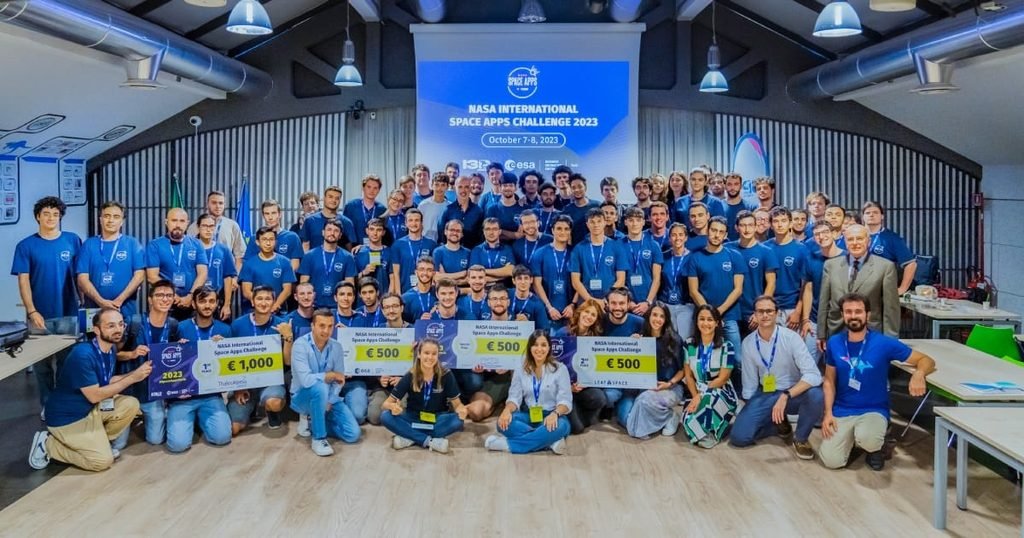
Hackathons are now organized in many countries and across a wide range of sectors.
One of the best-known international examples is NASA’s International Space Apps Challenge. NASA launched the challenge in 2012 as an international competition built around open space-related data and global problem-solving. Participants have developed software, hardware, data visualizations, mobile applications, and other solutions.
NASA reported in 2021 that Space Apps had grown from 25 local events in 17 countries in its first year to more than 250 local events in 87 countries and territories. The program brought together technologists, scientists, designers, entrepreneurs, artists, and others.
Hackathons are also used in higher education and public-policy settings. MIT’s Technology and Policy Program, for example, reported that its 8th annual Policy Hackathon, held virtually in November 2025, brought together more than 140 participants from around the world. Teams worked on socio-technical challenges involving areas such as transit, internet safety, and energy. The event had been organized annually since 2018.
These examples illustrate how the hackathon model has expanded far beyond traditional software development. Today, a hackathon may focus on space exploration, public policy, education, healthcare, transport, climate, business, accessibility, community development, or many other fields.
What Happens to a Project After the Hackathon?
The end of a hackathon does not necessarily mean the end of a project.
Some teams continue developing their prototype. They may improve the technology, conduct additional testing, study users, seek funding, establish a startup, publish the project as open source, or work with an organization that is interested in implementing it.Other projects may become research experiments or educational portfolio pieces.
Some teams discover that their initial idea is not practical. That can also be a valuable result. Identifying weaknesses early can save time and resources that otherwise might have been spent developing an unsuitable product.
In many cases, however, projects remain prototypes. Moving from a weekend demonstration to a reliable real-world system requires much more work.
For example, a health-related application may require extensive testing, privacy protections, clinical evaluation, regulatory compliance, and secure infrastructure. A hardware product may require manufacturing, safety testing, supply chains, and maintenance.
The hackathon should therefore be viewed as a starting point for exploration, not as the final stage of product development.
Conclusion: Why Hackathons Matter in a Changing World
Hackathons have developed from relatively focused software gatherings into a broad international model for collaboration and experimentation.
Their central idea remains simple: bring people together around a problem, provide a limited period for focused work, and encourage them to turn ideas into something tangible.
The modern hackathon can involve programmers, engineers, designers, researchers, entrepreneurs, students, artists, policymakers, and subject experts. It can focus on software, hardware, open data, education, business, public services, or social challenges.
Hackathons can provide opportunities to learn, experiment, build prototypes, exchange ideas, and work with people from different backgrounds. They can also help organizations explore new possibilities and give participants practical experience.
At the same time, a hackathon is not a replacement for careful research, long-term engineering, testing, funding, or implementation. Not every prototype becomes a successful product, and not every event produces measurable educational or social outcomes.
Their greatest value may be the environment they create: a structured space where people can move from problem → idea → collaboration → prototype → feedback in a relatively short time.
As technology and society continue to change, hackathons provide one way for people around the world to experiment with solutions, learn from one another, and explore what might be possible next.
Frequently Asked Questions About Hackathons
- What is a hackathon?
A hackathon is a time-limited collaborative event in which participants work on a problem, idea, or theme and develop a prototype or other practical solution. - Do I need coding skills to join a hackathon?
Not always. Some hackathons require technical skills for particular projects, but many welcome designers, researchers, business specialists, writers, subject experts, and beginners. NASA’s Space Apps Challenge, for example, welcomes participants from many backgrounds and skill levels. - How long does a hackathon usually last?
There is no universal duration. Some hackathons last several hours, while others run for a day, a weekend, or longer. The organizers determine the schedule. - What happens during a hackathon?
Participants generally learn about the challenge, form teams, choose or develop an idea, research the problem, build a prototype, test it, prepare a submission, and present the project for evaluation. The exact process varies by event. - Are hackathons only for students?
No. Hackathons can be organized for students, professionals, companies, open communities, researchers, government participants, and members of the public. - How are hackathon projects judged?
Judging criteria depend on the event. Common factors include innovation, technical implementation, usability, design, feasibility, potential impact, and presentation. - Can a hackathon project become a real business?
Yes, a hackathon project can become the starting point for a startup or a product, but participation does not guarantee commercial success. A prototype normally requires additional development, testing, funding, and validation before becoming a sustainable business. - What should a beginner do before joining a hackathon?
A beginner should understand the event rules, learn about the theme, choose a realistic project, identify useful skills, and be prepared to collaborate. It is usually better to build a small working prototype than to attempt an extremely complicated idea that cannot be completed within the available time. - Is a hackathon the same as a coding competition?
No. Some hackathons are heavily focused on programming, but many involve design, hardware, data, business, research, policy, or social-impact work. Modern hackathons can be multidisciplinary events rather than purely coding competitions. - Why are hackathons useful?
Hackathons can create opportunities for collaboration, experimentation, practical project work, networking, and rapid prototyping. Their value depends on how the event is designed and what participants do with the experience afterward.
References
- OpenBSD — Hackathons OpenBSD’s official history of its hackathons, including the June 1999 event documented as the first hackathon: https://share.google/H60VfceI5PQnnYYMY
- NASA — International Space Apps Challenge NASA’s official announcement of the 2012 International Space Apps Challenge and its global, open-data approach: https://share.google/VBUAU53uPgiEFSqhb
- NASA — 2013 International Space Apps Challenge Official information on the worldwide technology-development event and its software, hardware, and data projects: https://share.google/2pwKil5bUEyOKWWK5
- NASA — 10th Space Apps Challenge Official information on the international growth of the Space Apps program and its multidisciplinary participation: https://share.google/G1Zq5BSTZGmnO8TV9
- NASA — STEM Opportunities and Activities Information about participation in the International Space Apps Challenge across different backgrounds and skill levels: https://share.google/Rio2ca5GtrZYD7stf
- IBM — Hackathons Overview of hackathon workflows, collaboration, problem statements, registration, teams, and project submission: https://share.google/D96z26Vs5TpJKSKTg
- Major League Hacking — A Parent’s Guide to Hackathons Explanation of hackathons as invention-focused collaborative events and their accessibility to participants beyond computer science: https://share.google/XstJu5JeVOyHZyKDn
- Schulten & Chounta, Education and Information Technologies, 2024 Systematic literature review examining learning in hackathons and the evidence and limitations surrounding educational outcomes: https://share.google/3RqK0KuScuighTCyc
- Devpost — Hackathon Submission and Judging Criteria Overview of common judging criteria used in hackathons and the importance of event-specific rules: https://share.google/L3dhmUJnw2NAafh9x
- MIT — Student Intellectual Property Rights Guidance demonstrating that intellectual-property rules can differ between university-sponsored and external hackathons: https://share.google/89UK5N5DE3XaH5YZT
- MIT Technology and Policy Program — 2026 report on its 8th Annual Policy Hackathon Example of a modern multidisciplinary policy-focused hackathon: https://share.google/9UcBp6hGZZhXLzYmp
Thank You for Visiting…!
Visit again & again…!
Have a Great Day….

