

1. Introduction: How Rome Became One of History’s Greatest Empires
Few political powers have influenced so much of the world for so long as Rome. From a city in central Italy, Rome developed into a republic, then an empire whose territories stretched across much of Europe, North Africa, and western Asia. Roman institutions, roads, laws, architecture, languages, military organization, and urban traditions continued to influence societies long after Roman political control disappeared in the West.
Understanding Rome is not simply about learning the dates of emperors or famous battles. It is also about understanding how governments manage large territories, how economies support military power, how infrastructure connects distant regions, and how political systems respond to crisis.
The Roman story also challenges the simple idea that an empire suddenly “collapsed.” The Western Roman Empire did lose its imperial government in the fifth century, with 476 CE traditionally used as an important date, but the process was gradual and involved political instability, military pressures, economic difficulties, administrative changes, and transformations within Roman society. Meanwhile, the Eastern Roman Empire survived for nearly another thousand years.
2. From Republic to Empire: The Rise of Roman Power
Before Rome became an empire, it was a republic. Traditionally dated from 509 BCE to 27 BCE, the Roman Republic was governed through institutions that included elected magistrates, popular assemblies, and the Senate. Although Roman politics involved citizen participation, real power was strongly influenced by wealthy and powerful families.
During the Republic, Rome expanded steadily through warfare, alliances, political organization, and incorporation of conquered communities. Conflicts with neighboring Italian peoples were followed by wars against major Mediterranean powers, including Carthage during the Punic Wars. Rome eventually became the dominant power in the Mediterranean world.
But expansion also created new political and social pressures. Wealth from conquered territories changed Roman society, military commanders gained enormous influence, and competition among political leaders became increasingly intense.
Julius Caesar became one of the most important figures in this transformation. After military successes, particularly in Gaul, he gained extraordinary political influence. His conflict with the Senate and rival leaders eventually led to civil war. Caesar became dictator, but his assassination in 44 BCE created another struggle for power rather than restoring the old political balance.
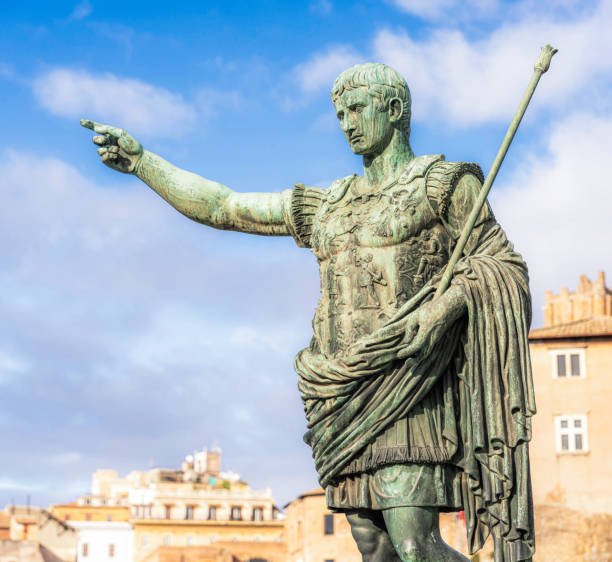
His adopted heir, Octavian, later known as Augustus, emerged victorious from the subsequent civil wars. In 27 BCE, Augustus formally began his rule while presenting himself as a restorer of the Roman state. The political system that developed under him is commonly called the Principate. Although republican institutions continued to exist, real political power increasingly centered on the emperor.
3. How Rome Expanded Across Europe, Africa and Asia
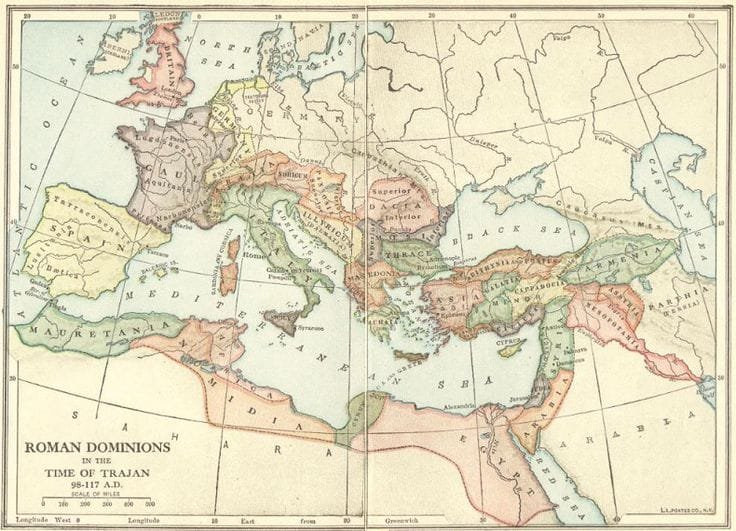
Roman expansion did not happen in a single campaign. It took centuries and occurred through different methods, including conquest, alliances, political agreements, colonization, and the gradual incorporation of local communities.
Under Augustus and his successors, Roman authority extended across regions including Hispania, Gaul, North Africa, Egypt, the Balkans, Britain, and much of the eastern Mediterranean. Rome’s eastern territories also included important areas of Anatolia, Syria, and the Levant. The empire’s borders were not permanently fixed; they expanded, contracted, and changed according to military and political circumstances.
Egypt was particularly important because of its agricultural wealth and strategic position. Augustus took control of Egypt after the defeat of Mark Antony and Cleopatra in 30 BCE. Rome also maintained a complicated relationship with powerful eastern states such as the Parthian Empire rather than simply conquering everything it encountered.
The Romans sometimes stopped expansion when further conquest became too expensive or difficult. The defeat of the Roman governor Publius Quinctilius Varus in the Teutoburg Forest in 9 CE, for example, helped limit Roman ambitions east of the Rhine. Roman expansion therefore involved decisions about geography, resources, diplomacy, and military risk, not simply a desire to conquer every available territory.
By the second century CE, Roman territories formed an enormous interconnected political system surrounding much of the Mediterranean. Under Emperor Trajan, around 117 CE, Roman territorial expansion reached one of its greatest extents.
4. The Political and Military Foundations of Roman Strength
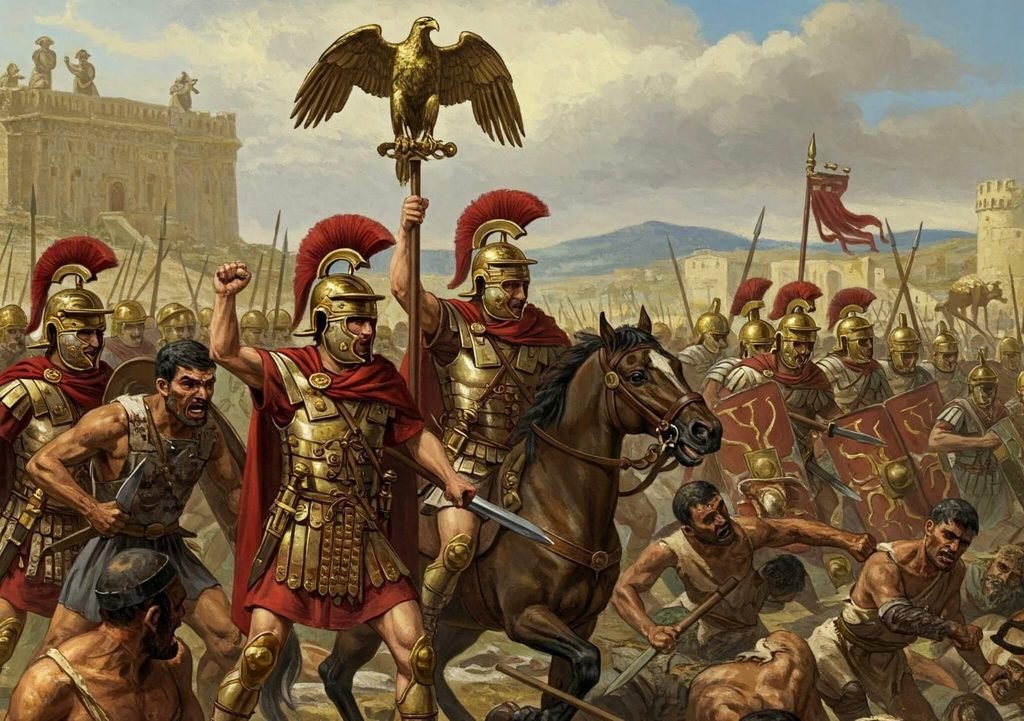
Rome’s success depended on more than battlefield victories. The empire developed institutions that allowed it to govern millions of people across distant provinces.Roman armies were highly organized and could build fortified camps, roads, bridges, and other infrastructure while on campaign. Soldiers were trained not only to fight but also to construct and maintain the facilities needed to support military operations.
Political administration was equally important. Provinces were governed through combinations of governors, local elites, tax systems, cities, and imperial officials. Rome often allowed communities to maintain aspects of their local traditions while recognizing Roman political authority.
Roman citizenship also changed over time. At first, citizenship was concentrated largely in Italy, but it was gradually extended to people in provincial communities. In 212 CE, Emperor Caracalla issued the Constitutio Antoniniana, which extended Roman citizenship to most free inhabitants of the empire. This helped redefine what it meant to be Roman.
The army and the state were closely connected. Legions protected frontiers, supported political authority, and sometimes decided who would become emperor. That relationship strengthened Rome when the army remained relatively stable, but it could become dangerous during periods of political crisis.
5. Roman Roads, Trade, Law and Engineering
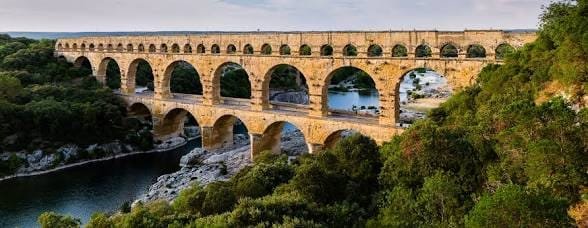
One of Rome’s most lasting achievements was its infrastructure. Roads linked military bases, cities, ports, agricultural regions, and administrative centers. Some roads were built primarily for military purposes, but they also supported trade, travel, and communication.
Roman engineering included aqueducts, bridges, drainage systems, amphitheaters, baths, harbors, walls, temples, and large public buildings. Concrete, arches, vaults, and other construction techniques allowed Roman builders to create structures that remain famous today.
Trade connected the empire to a much wider world. Grain moved from agricultural regions such as Egypt and North Africa toward major cities. Luxury products, metals, ceramics, textiles, spices, glass, and other goods circulated across long-distance networks. Roman commerce also connected the Mediterranean to regions beyond the empire.
Law was another major part of Roman influence. Roman legal traditions developed over centuries and covered property, contracts, citizenship, inheritance, family relationships, and public authority. Roman law was not the same as modern law, and Roman society remained highly unequal, but legal ideas developed during the Roman period influenced later European legal traditions.
The scale of Roman economic and commercial activity is reflected in archaeological discoveries of coins, pottery, shipwrecks, inscriptions, buildings, and trade goods. Museums and archaeological institutions use such evidence alongside written sources to reconstruct Roman life.
6. Life Inside the Roman Empire
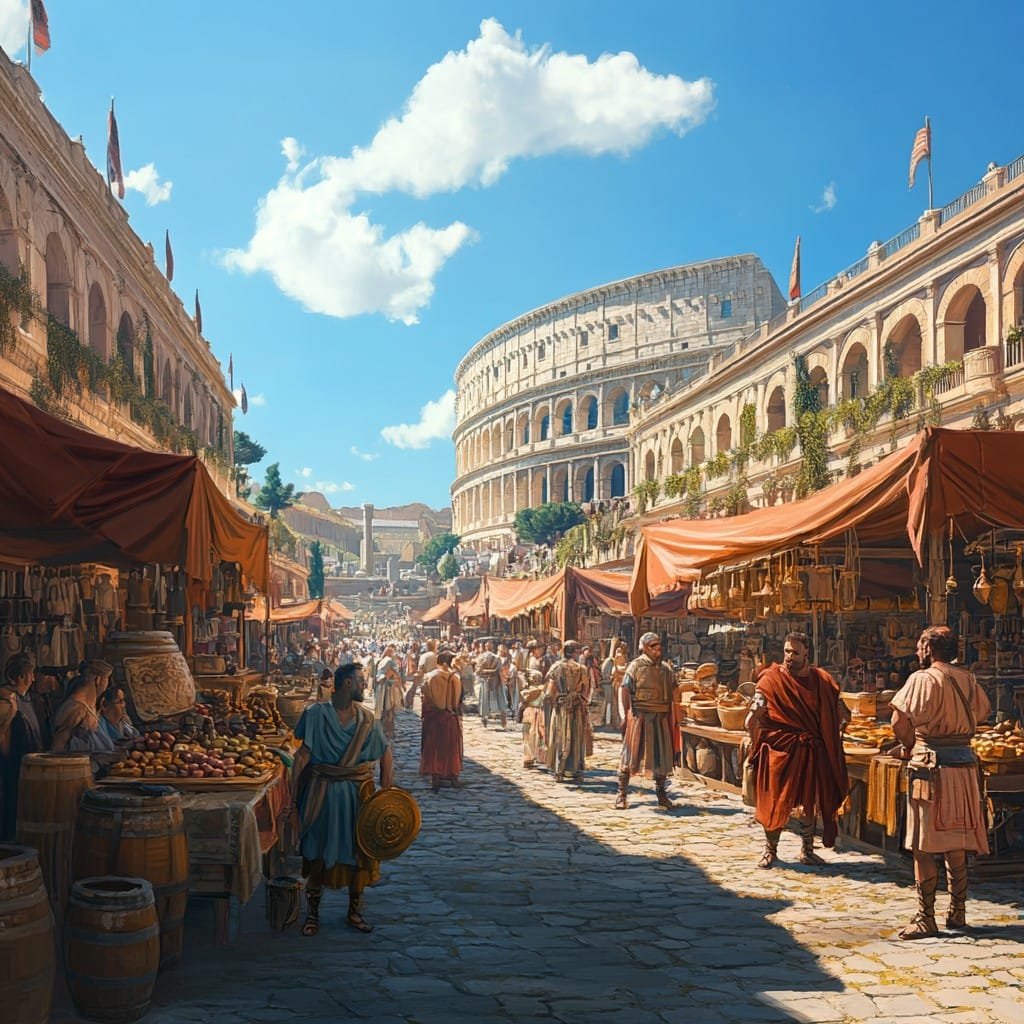
Life in the Roman Empire varied enormously according to region, wealth, occupation, gender, legal status, and citizenship.
At the top of society were senators, wealthy landowners, officials, military leaders, and other elites. Below them were merchants, artisans, farmers, soldiers, laborers, and many other groups. Millions of people also lived in slavery. Enslaved people worked in households, farms, workshops, mines, and other settings. Slavery was an important part of Roman society and economy, while conditions differed greatly depending on an individual’s work and circumstances.
Roman cities were often crowded and socially diverse. Wealthy families could live in large houses or villas, while poorer residents might occupy apartment buildings. Public baths, markets, temples, theaters, arenas, and forums played important roles in urban life. The British Museum uses archaeological objects as evidence for differences between wealthy and poorer inhabitants of Roman cities.
Education was available mainly to families who could afford it, especially in urban environments. Roman education often emphasized reading, writing, grammar, rhetoric, literature, and public speaking.
Religion was also central to Roman life. Traditional Roman religious practices included sacrifices, festivals, temples, household rituals, and the worship of many gods. At the same time, the empire contained diverse religious communities, including followers of Judaism, Christianity, and numerous local traditions.Christianity began as a small movement within the Roman world and eventually became closely connected to imperial power. Constantine’s reign marked an important turning point, although Christianity did not instantly replace all other religious practices.
7. The Empire at Its Height

The first and second centuries CE are often remembered as a period of considerable stability and prosperity, although the experience was different across regions and social groups.
The period beginning under Augustus established a relatively stable imperial system that continued through several dynasties. The Julio-Claudians were followed by the Flavians and then the so-called Five Good Emperors and their successors. The second century included emperors such as Trajan, Hadrian, Antoninus Pius, and Marcus Aurelius.
During these centuries, Roman cities expanded, trade flourished, public buildings were constructed, and Roman citizenship spread across provincial populations. Art and architecture also developed on a huge scale.
This stability is sometimes associated with the Pax Romana, or “Roman Peace.” The term does not mean that every part of the empire was peaceful. Rome continued to fight wars and suppress revolts, and frontier regions could be highly militarized. It is better understood as a long period during which the empire generally maintained a functioning political order across much of its territory.
8. The Beginning of Rome’s Problems
Roman power began facing serious difficulties during the third century CE. There was no single moment when all of these problems appeared, but several pressures developed at the same time.
The empire experienced political instability, civil wars, economic problems, invasions, and outbreaks of disease. Between 235 and 284 CE, a succession of emperors ruled for relatively short periods, and many came to power through military support. The army became increasingly important in choosing and removing emperors.The empire also faced external threats. On the eastern frontier, Rome confronted powerful Persian states. Along the northern frontiers, different Germanic peoples and other groups placed growing pressure on Roman defenses.
At the same time, the enormous size of the empire made administration more complicated. Moving soldiers and resources over long distances could be expensive and slow. The emperor had to manage multiple frontiers at once.These problems did not immediately destroy Rome. They instead created conditions that required major political and military reforms.
9. Political Instability and Leadership Struggles
Political instability became one of the most serious challenges to the imperial system.
During parts of the third century, emperors could be proclaimed by armies in different regions, leading to civil wars. A ruler who needed military support to become emperor could face another army-backed challenger soon afterward.This instability damaged continuity in government. Instead of concentrating on long-term administration, resources could be redirected toward civil conflict.
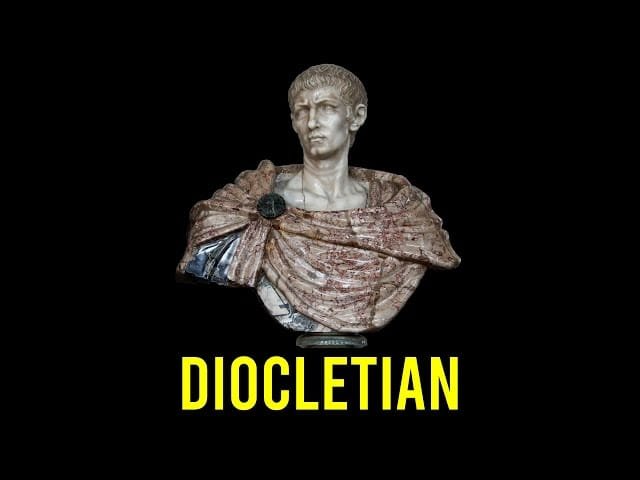
Emperor Diocletian, who came to power in 284 CE, responded with major reforms. He reorganized provincial administration, strengthened the structure of imperial government, and introduced the Tetrarchy, a system involving four imperial rulers. The purpose was to make the enormous empire easier to govern and respond more quickly to threats.The system did not permanently solve the succession problem, but it demonstrated that the Roman government could adapt to crisis through institutional change.
10. Economic Problems and Rising Costs
The Roman economy was large and sophisticated, but it faced increasing pressures during late antiquity.
Military defense was expensive. Armies had to be paid, supplied, equipped, and moved between regions. Government spending also supported administration, infrastructure, and the imperial court.
Changes in coinage and periods of inflation affected economic stability. Tax burdens could become difficult for some communities, particularly when the state needed greater revenue to finance military and administrative demands.
However, it would be misleading to claim that one economic problem simply “caused” Rome to fall. The economy varied across regions, and some parts of the empire remained wealthy and commercially active even during periods of western political decline.The eastern empire, in particular, possessed important cities, trade routes, agricultural resources, and tax revenues. Its continued strength helps explain why the Eastern Roman Empire survived long after imperial government disappeared in the West.
11. Military Pressure and Invasions
Military pressure increased during the late Roman period, but the word “invasion” can sometimes oversimplify what happened.
Rome had interacted with neighboring peoples for centuries through warfare, diplomacy, trade, migration, recruitment, and settlement. Some groups were enemies; others served in Roman armies or were admitted into imperial territory.
In the fourth century, the movement of the Huns across eastern Europe placed additional pressure on peoples living near the Roman frontier. In 376, large numbers of Goths entered Roman territory, and tensions between the newcomers and Roman authorities contributed to conflict. In 378, Roman forces suffered a major defeat at the Battle of Adrianople, where Emperor Valens was killed.
The Visigoths later captured and sacked Rome in 410 under Alaric. Other territories were also lost or increasingly controlled by groups that developed their own kingdoms within former Roman lands.These events did not mean that Roman civilization suddenly disappeared. Roman institutions, language, Christianity, law, cities, and administrative practices continued in many regions, even as imperial authority changed.
12. The Division of the Roman Empire
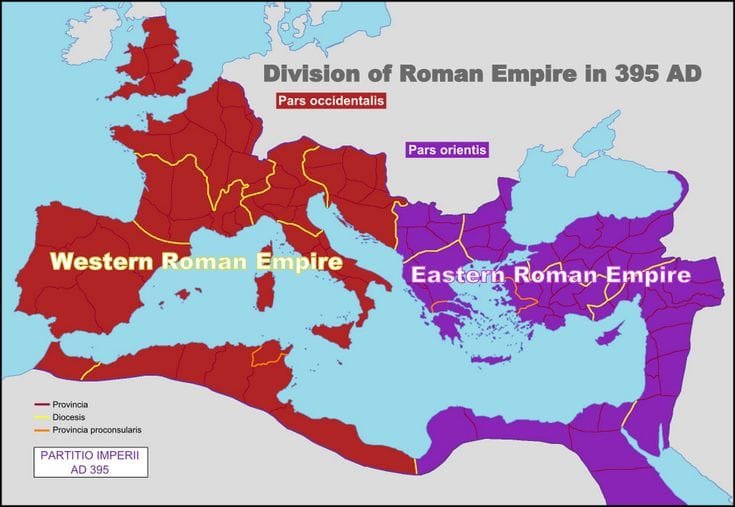
The Roman Empire was sometimes divided administratively for practical reasons long before it disappeared in the West.
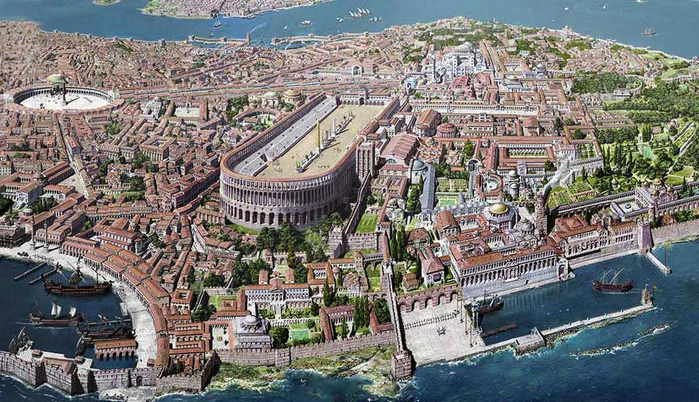
Diocletian’s reforms created separate administrative spheres, while Constantine later reunited imperial control. In 330 CE, Constantine established Constantinople on the site of the ancient city of Byzantium and developed it as a major imperial capital. Its location gave it access to important trade routes between Europe and Asia.
After the death of Emperor Theodosius I in 395 CE, the empire was again ruled separately in western and eastern courts. This division became increasingly permanent.
The Eastern Empire had important advantages: Constantinople was heavily fortified and strategically located; eastern provinces contained major cities and productive agricultural regions; and the eastern government retained substantial tax revenues.The Western Empire faced greater military and political difficulties, and its imperial government gradually lost effective control over more of its territory.
13. The Fall of the Western Roman Empire
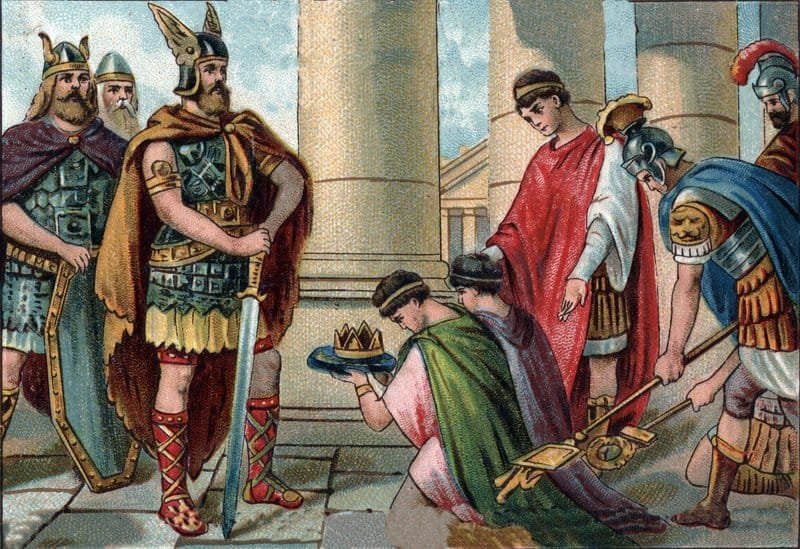
The Western Roman Empire did not collapse in one single event.
During the fifth century, different territories in the West came under the control of new political powers. Roman emperors increasingly depended on military commanders, some of whom were themselves from backgrounds outside the traditional Roman elite.
In 476 CE, the military leader Odoacer deposed Romulus Augustulus, a young emperor who is commonly described as the last Western Roman emperor. Odoacer did not simply destroy every Roman institution; he ruled Italy while recognizing, at least formally, the authority of the Eastern emperor. The event became a traditional marker for the end of the Western Roman Empire.The date 476 is therefore important, but it should not be interpreted as the instant when Roman culture or society vanished.
Cities continued to exist. Christianity remained influential. Roman law and administrative traditions survived in different forms. Latin developed into the Romance languages. Roman buildings and roads continued to be used. Political authority simply became more fragmented.
14. What Happened to the Eastern Roman Empire?
The eastern half of the Roman Empire survived.
Modern historians often call the medieval eastern state the Byzantine Empire, but its inhabitants generally considered themselves Romans. They continued to use Roman political traditions and identified their empire as the Roman Empire.Constantinople became the center of this continuing Roman state. Over the centuries, the empire changed considerably. Greek became increasingly dominant as a language of government and culture, Christianity became central to public life, and political institutions evolved.The Eastern Roman Empire survived wars, territorial losses, dynastic struggles, economic changes, and conflicts with neighboring powers. It eventually came to an end in 1453, when Ottoman forces captured This long survival is one reason historians increasingly avoid treating the history of Rome as a simple story of sudden collapse.
15. Why Did Rome Fall? Understanding the Main Factors
There is no single explanation accepted by all historians for the decline of the Western Roman Empire.One factor was political instability. Repeated civil wars and short-lived rulers weakened the ability of the state to maintain consistent leadership.Another was military pressure. Rome faced powerful enemies and large movements of peoples along several frontiers simultaneously. The western government increasingly struggled to
Economic and fiscal pressures also mattered.
Military defense and administration were expensive, and changes in taxation, currency, trade, and landholding affected different regions in different ways.A fourth factor was the difficulty of governing such a large territory. Rome’s size was a source of strength when transportation, administration, and military systems worked effectively. During periods of instability, however, the same size could make rapid responses more difficult.There were also social and demographic changes, shifts in military recruitment, changing relationships between emperors and provincial elites, and the growth of new political powers within former imperial territory.Historians continue to debate how these factors should be weighted.
Some older interpretations emphasized moral decline or cultural weakness, while much modern scholarship places greater attention on political transformation, economic structures, military pressures, regional differences, and the changing nature of the Roman state.The most useful conclusion is therefore not that Rome “failed because of one problem,” but that the Western imperial system changed under the pressure of many interconnected developments.
16. The Legacy of the Roman Empire
Rome’s political empire disappeared in the West, but its influence did not.
Roman law became a major influence on later legal systems. Latin developed into languages including Italian, Spanish, French, Portuguese, and Romanian. Roman political vocabulary and institutions influenced later governments. Roads, bridges, aqueducts, amphitheaters, arches, and other structures remain visible across Europe, North Africa, and the Middle East.Roman Christianity also became one of the foundations of European religious history. The Eastern Roman Empire preserved and transformed Roman traditions in the medieval Mediterranean world.
Roman history also survives through literature and historical writing. Authors such as Livy, Tacitus, Suetonius, and others provide written evidence, although historians must consider their political viewpoints and limitations. Archaeological evidence, inscriptions, coins, buildings, graves, pottery, and everyday objects provide additional evidence that can confirm, complicate, or sometimes challenge written accounts.
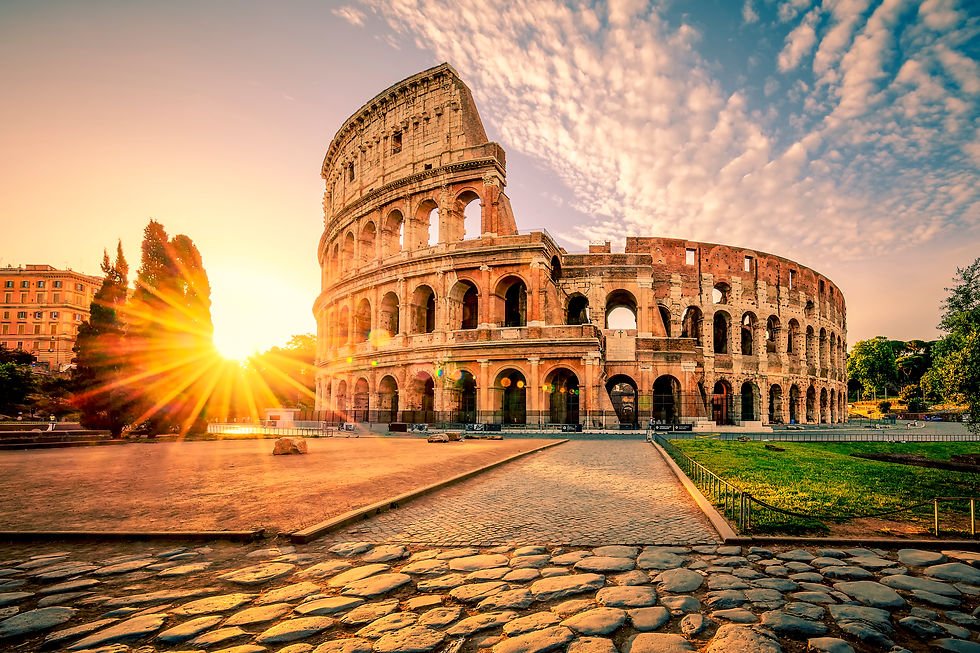
The Roman legacy is therefore larger than the ruins of the Colosseum. It can be seen in languages, legal concepts, architecture, religion, cities, literature, and historical ideas that continued to develop long after Rome’s political power changed.
17. Conclusion: What the Rise and Fall of Rome Teaches Us
The history of Rome is a story of transformation as much as rise and fall.Rome grew through military power, political organization, administrative flexibility, infrastructure, trade, and the gradual incorporation of diverse peoples. At its height, it connected enormous territories around the Mediterranean and beyond.Its decline in the West was much more complicated. Political struggles, military pressures, economic difficulties, administrative challenges, and changes within Roman society interacted over generations. The traditional date of 476 CE marks an important political transition, but it does not mark the disappearance of Roman culture or the end of the Roman world.Perhaps the most important lesson of Roman history is that large political systems rarely change because of one event. Institutions can remain strong for centuries while adapting to new circumstances, and they can also become vulnerable when several pressures develop at the same time.Rome’s roads, laws, cities, languages, religious traditions, architecture, and historical writings demonstrate how deeply a civilization can influence later generations. The Roman Empire ended in different ways in different places, but its legacy continued to shape the world long after its emperors were gone.
Frequently Asked Questions
- When did the Roman Empire begin?
The Roman Empire is traditionally dated from 27 BCE, when Octavian received the title Augustus and established the political system known as the Principate. Roman imperial development, however, grew out of the institutions and conflicts of the earlier Roman Republic. - Who was the first Roman emperor?
Augustus, formerly known as Octavian, is generally regarded as the first Roman emperor. He maintained many republican institutions while concentrating unprecedented political authority in his own position. - What was the largest extent of the Roman Empire?
The empire reached one of its greatest territorial extents under Emperor Trajan around 117 CE. Roman territory then covered a vast area of Europe, North Africa, and western Asia. - Why did the Roman Empire fall?
The decline of the Western Roman Empire resulted from several interconnected factors, including political instability, civil conflict, military pressures, economic and fiscal difficulties, administrative challenges, and changes in the relationship between the Roman government and surrounding peoples. - Did the Roman Empire end in 476 CE?
476 CE is the traditional date associated with the end of the Western Roman Empire because Romulus Augustulus was deposed that year. The Eastern Roman Empire continued until the Ottoman conquest of Constantinople in 1453. - What was the difference between the Western and Eastern Roman Empires?
They were two parts of the same Roman imperial tradition that increasingly operated through separate governments. The eastern state, centered on Constantinople, survived much longer and developed into what modern historians call the Byzantine Empire. - Did Roman civilization disappear after 476?
No. Roman laws, languages, Christianity, architecture, political traditions, cities, and cultural practices continued in many parts of Europe, North Africa, and the Mediterranean. - Why is Roman history still important today?
Roman history helps explain the development of law, government, urban planning, architecture, language, religion, infrastructure, and ideas about empire. It also provides a long historical example of how political systems respond to growth, crisis, and transformation.
References
The Metropolitan Museum of Art — “The Roman Empire (27 B.C.–393 A.D.)”
A detailed overview of Roman imperial government, expansion, political development, Diocletian, Constantine, and the fall of the Western Empire. Metropolitan Museum of Art — Roman Empire
The Metropolitan Museum of Art — “Byzantium (ca. 330–1453)”
Useful for understanding Constantinople and the continuation of the Roman Empire in the East.
Metropolitan Museum of Art — Byzantium
The British Museum — Roman Empire educational resources
Provides material on Roman society, economy, trade, technology, and archaeological evidence.
Smarthistory — Early Roman Empire
Provides an accessible introduction to the imperial period and the transition from republican government to imperial rule.
Smarthistory — Early Roman Empire