
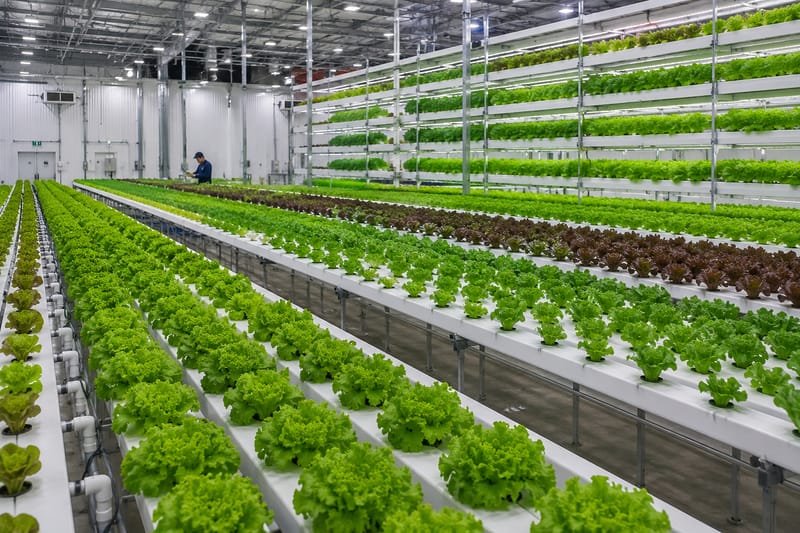
Introduction: Why Hydroponic Farming Is Gaining Attention
Agriculture is facing an important challenge: how can the world produce enough food while using limited land and water?
Farmers in many regions are dealing with water shortages, changing weather patterns, declining soil quality, growing cities, and rising demand for fresh food. At the same time, many people now live far from traditional farming areas. These changes have encouraged researchers, farmers, businesses, and governments to explore new ways of growing crops.
One method receiving growing attention is hydroponic farming.
Hydroponics allows plants to grow without traditional agricultural soil. Instead, their roots receive water, oxygen, and dissolved nutrients through a carefully managed growing system. The plants may be supported by materials such as coconut coir, perlite, or other growing media rather than soil.
Hydroponics is not a replacement for every form of traditional agriculture. However, it can provide another way to produce certain crops, particularly where land, soil quality, or water availability creates difficulties.
What Is Hydroponic Farming?
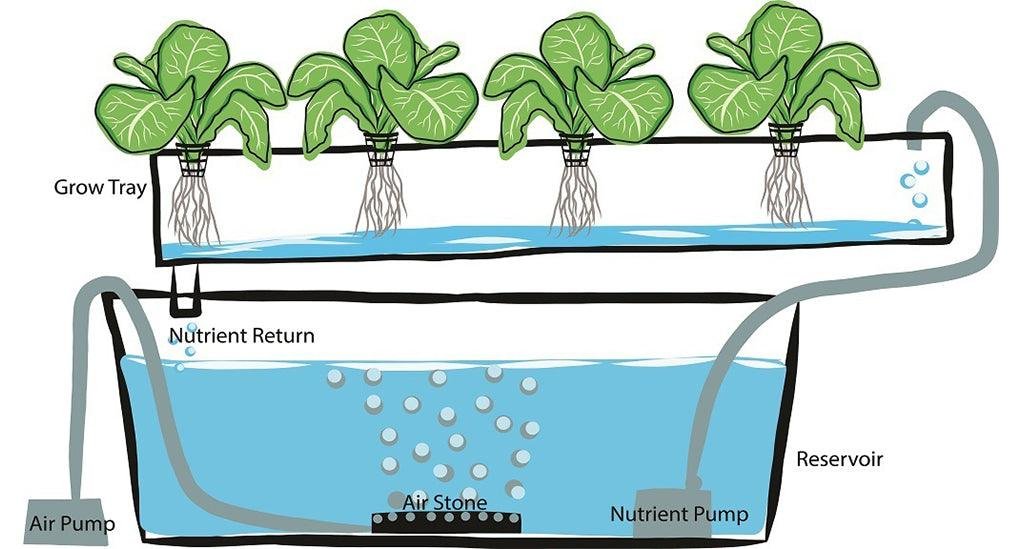
Hydroponic farming is a method of growing plants without using conventional soil.
In a normal field, plant roots obtain water and nutrients from the surrounding soil. In a hydroponic system, these nutrients are supplied directly through a water-based nutrient solution.
A simple example is a lettuce plant growing in a small channel. Its roots may hang below the channel while a nutrient solution flows past them. The plant receives the water and minerals it needs without its roots having to search through soil.
Depending on the system, plants may have their roots directly in the nutrient solution or may be supported by a growing material. Common growing media include materials such as coconut coir, perlite, and vermiculite.The important idea is simple: the soil is removed, but the plant still receives the things it needs to grow—water, nutrients, oxygen, light, and suitable environmental conditions.
How Does a Hydroponic System Work?
- Although hydroponic systems differ in design, the basic process is relatively easy to understand.
- First, seeds are germinated or young seedlings are prepared. The seedlings are then placed into the hydroponic system.
- Next, water containing dissolved nutrients is supplied to the plant roots. Oxygen must also be available around the roots because roots need oxygen for healthy growth.
- The system may also monitor factors such as pH, temperature, humidity, light, and nutrient concentration. These conditions can be adjusted depending on the crop.
- Finally, the plants continue growing until they reach the desired harvest stage.
- A basic hydroponic system therefore has several important components:
- Water: carries nutrients to the roots.
- Nutrients: provide essential mineral elements required for plant growth.
- Oxygen: helps roots function properly.
- Growing support: holds the plant in position where necessary.
- Light: provides the energy needed for photosynthesis.
- Environmental control: helps maintain suitable temperature, humidity, and other conditions.
FAO notes that successful hydroponics requires careful management of nutrients, water quality, and equipment, and that mistakes or equipment failures can cause serious crop losses.
Main Types of Hydroponic Systems
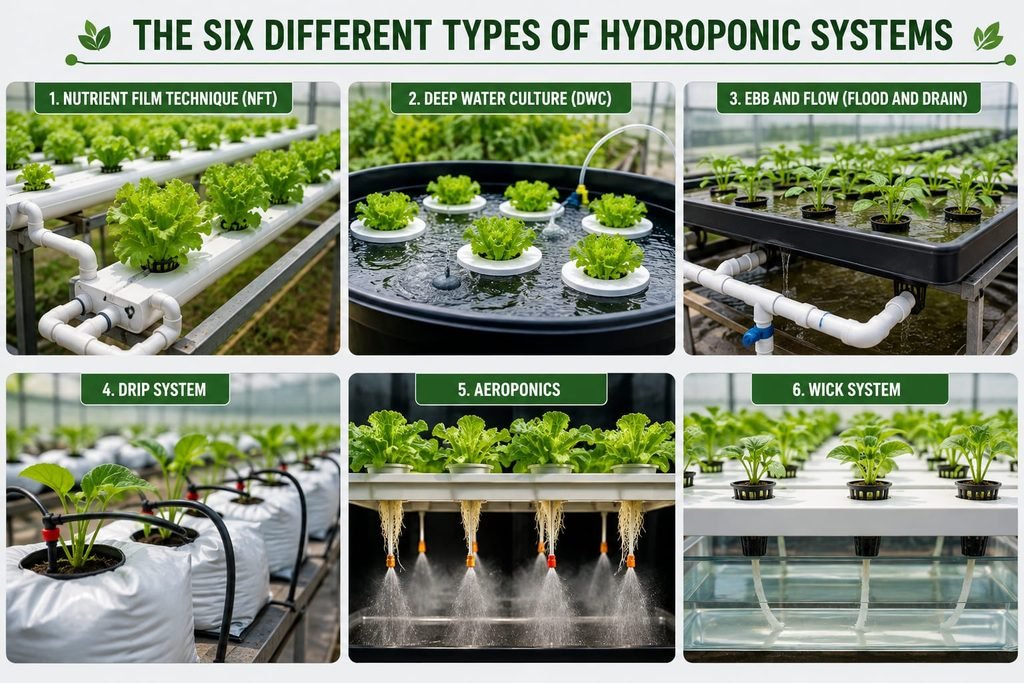
There is no single hydroponic system. Different designs deliver water, nutrients, and oxygen to the roots in different ways.
Nutrient Film Technique (NFT)
- In an NFT system, a thin layer of nutrient solution flows through channels where the plant roots are located.
- The solution continuously or periodically moves past the roots and then returns to a reservoir.
- NFT is often used for crops such as leafy greens because the system can support many plants in relatively compact spaces.
- Its advantages include efficient water circulation and a relatively clean growing environment. However, a pump failure can quickly interrupt nutrient delivery, making reliable equipment important.
Deep Water Culture (DWC)
- In Deep Water Culture, plant roots are suspended in nutrient-rich water.
- An air pump or similar equipment is commonly used to provide oxygen to the water. The plant sits above the reservoir while the roots extend downward.
- DWC can be relatively simple to understand and is often used in small-scale and educational systems. However, careful oxygen and water management is important for healthy roots.
Drip Systems
- Drip systems deliver nutrient solution to individual plants through small emitters or tubes.
- The solution can be supplied at controlled intervals, depending on the design and crop.
- This approach can work with larger plants and a range of growing media. However, blocked emitters or uneven water delivery can create problems if the system is not maintained properly.
Ebb and Flow Systems
- An ebb and flow system periodically floods the growing area with nutrient solution and then drains it back into a reservoir.
- This allows the roots to receive both nutrients and oxygen as the growing area is flooded and drained.
- The system can be flexible, but it requires pumps, timers, and proper drainage.
Wick Systems
- A wick system uses a material called a wick to move nutrient solution from a reservoir toward the plant’s growing medium.
- Because the movement of water is relatively simple, wick systems can be useful for small-scale setups.
- However, they may not provide enough nutrient solution for larger or fast-growing plants.
Aeroponics
- Aeroponics is closely related to hydroponic agriculture but is technically a different soilless growing method.
- Instead of placing roots in nutrient solution, aeroponic systems suspend the roots and deliver water and nutrients in a fine mist.
- Both approaches are part of the wider field of soilless and controlled-environment agriculture, but they should not be treated as identical systems.
Why Are Farmers and Growers Using Hydroponics?
Interest in hydroponics comes from several potential advantages.
- One major advantage is control. In soil-based farming, conditions can vary greatly across a field. Hydroponic systems can provide more direct control over water and nutrient delivery.
- Another advantage is space efficiency. Hydroponic systems can be arranged in compact layouts, including vertical systems where plants are grown in multiple layers.
- Hydroponics can also reduce dependence on the natural quality of agricultural soil. This makes the approach potentially useful in places where soil is poor, contaminated, or difficult to cultivate.
- FAO describes hydroponics as particularly relevant in areas with poor soil or limited arable land and notes its potential for efficient use of water and other inputs.
- However, these advantages do not mean hydroponics is automatically better than traditional farming. The result depends on the crop, system design, local climate, energy costs, water quality, management skills, and market conditions.
How Can Hydroponics Save Water?
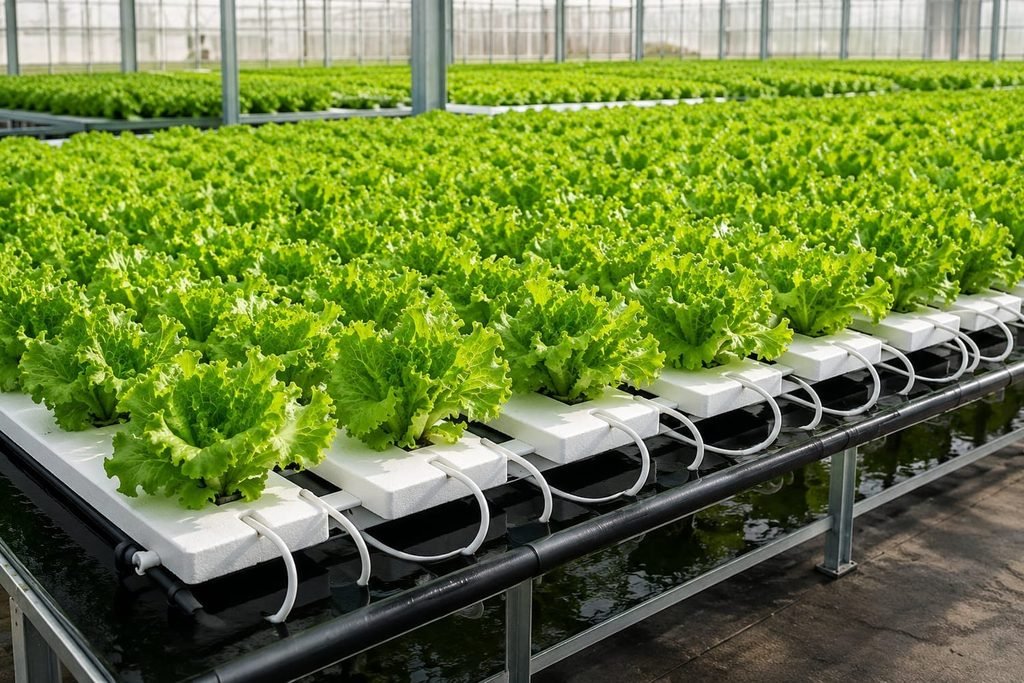
Water management is one of the most discussed advantages of hydroponic farming.Many hydroponic systems collect water after it passes through or around the roots and return it to a reservoir. The water can then be reused rather than being lost immediately.
This type of recycling can reduce water losses from runoff and make it possible to manage water more precisely.
However, there is no single water-saving percentage that applies to every hydroponic farm. Water use depends on the crop, system design, climate, leakage, evaporation, cleaning practices, and whether the system is recirculating.
FAO has documented hydroponic projects where substantial water savings are possible. In one 2026 example from Grenada, a family farm reported using up to 90 percent less water than conventional cultivation, but this should be understood as a result associated with that particular system and context rather than a universal figure for all hydroponics.The key point is that well-designed recirculating systems can use water efficiently, but good management is still necessary.
Growing Food in Less Space

Land is another important consideration.
Hydroponic systems can support intensive production because plants do not necessarily need large areas of soil between rows. In some controlled environments, plants can also be grown vertically in stacked layers.
This idea is closely connected to vertical farming, where crops are produced in multiple levels rather than only across a horizontal field.
Hydroponics can therefore be useful in cities, warehouses, greenhouses, rooftops, and other locations where available land is limited.
The U.S. Department of Agriculture reports that controlled-environment agriculture includes greenhouses, vertical agriculture, hydroponics, and other methods. In the United States, the number of controlled-environment agriculture operations more than doubled between 2009 and 2019, while production also increased during the same period.
Which Crops Can Be Grown Using Hydroponics?
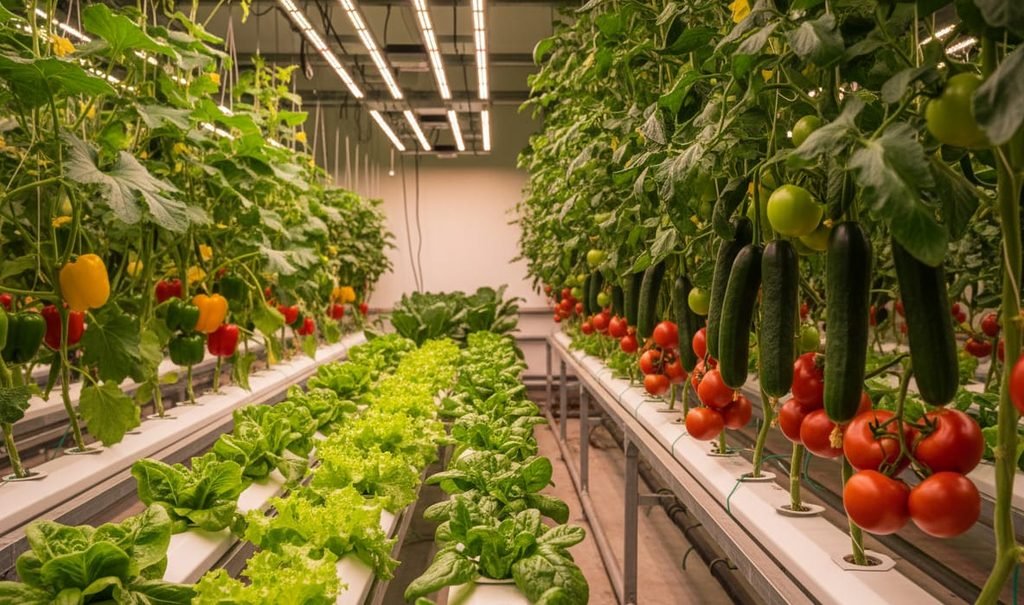
Hydroponic systems are commonly used for a range of vegetables, herbs, and small fruits.
Common examples include:
- Lettuce
- Spinach and other leafy greens
- Herbs
- Tomatoes
- Cucumbers
- Peppers
- Strawberries
- The USDA and other agricultural institutions identify crops such as tomatoes, lettuce, cucumbers, strawberries, and peppers among those grown in hydroponic and controlled-environment systems.
- Leafy greens are especially common because they can grow relatively quickly and can be suited to compact systems.
- Larger fruiting crops such as tomatoes and cucumbers can also be grown hydroponically, but they generally require more structural support, nutrients, space, and management.
- This is why hydroponics should not be viewed as a system that works equally well for every crop.
Hydroponics and Urban Agriculture
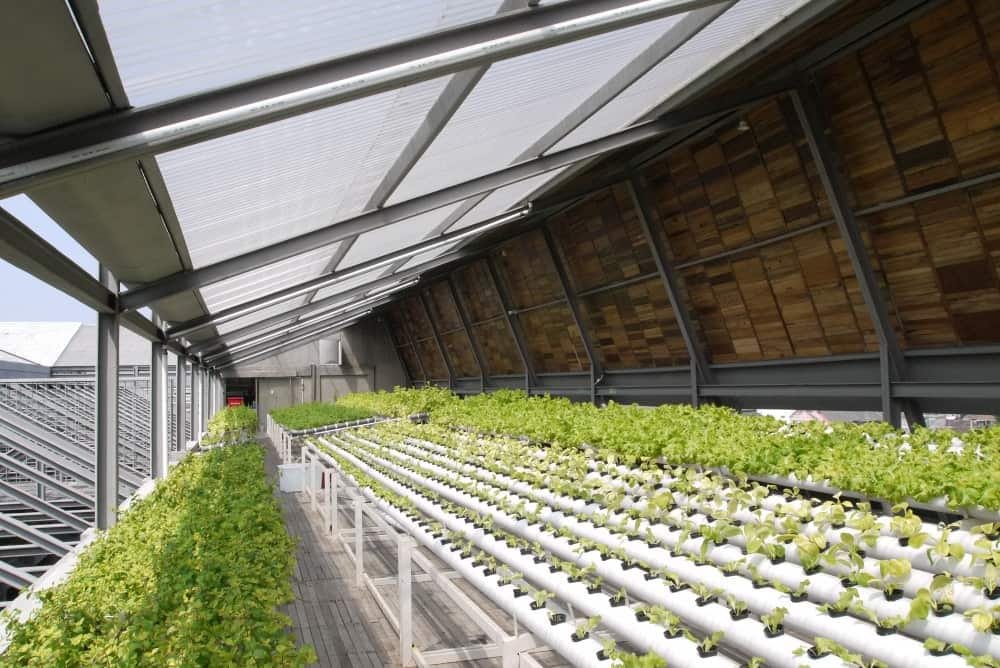
- One of hydroponics’ most interesting applications is urban agriculture.
- Cities have limited open farmland, but they contain unused or underused spaces. Hydroponic systems can potentially be installed in warehouses, rooftops, greenhouses, and other controlled environments.
- Singapore provides a clear example. The Singapore Food Agency reports that indoor farms in the country often use vertical or multi-tier systems combined with recirculating hydroponics. Rooftop farms can also use hydroponic systems to make productive use of otherwise underused areas.
- Producing some food closer to consumers can reduce the distance between farms and markets. It can also provide opportunities for local food production where conventional farmland is scarce.
- However, urban hydroponics also has disadvantages. Indoor farms may require electricity for lighting, pumps, ventilation, and climate control. Buildings and equipment can also be expensive.
- As a result, location and operating costs remain important factors.
Technology in Modern Hydroponic Farming
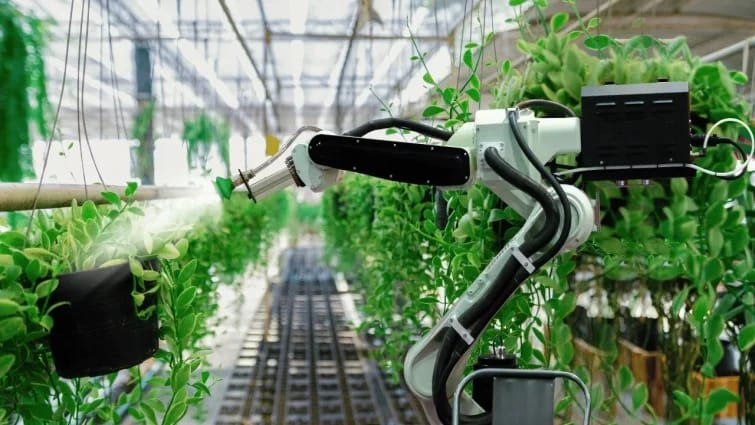
Modern hydroponics relies on technology to maintain the conditions plants need.
Some systems use sensors to monitor pH, which indicates how acidic or alkaline the nutrient solution is. Nutrient concentration can also be monitored so that plants receive an appropriate supply.
Other technologies include:
- Temperature monitoring
- Humidity control
- Artificial lighting
- Water pumps
- Irrigation controls
- Environmental sensors
- Automated monitoring systems
These tools allow growers to observe conditions more closely than would normally be possible in a simple outdoor field.
However, greater technology also means greater dependence on equipment. A pump, sensor, electrical system, or other component can fail. Good system design and regular maintenance are therefore essential.
Research and development is continuing in areas such as nutrient management, lighting strategies, crop quality, and disease control.
Hydroponic Farming Around the World
Hydroponics is not limited to one country or climate.
- In North America, controlled-environment agriculture includes greenhouse production, indoor farming, vertical farming, and hydroponic systems. USDA data show that controlled-environment production has expanded in the United States, with hydroponics playing an important role.
- In Asia, hydroponics is particularly relevant to urban agriculture and places where land is limited. Singapore, for example, supports indoor and rooftop agriculture using modern growing technologies, including recirculating hydroponics.
- In parts of the Caribbean, hydroponics has been explored as a response to difficult rainfall conditions. FAO has highlighted a family farm in Grenada using hydroponics to deal with irregular rainfall and improve the reliability of production.
- In Europe, controlled-environment agriculture is also part of research and innovation discussions. The European Commission describes controlled-environment agriculture as including greenhouses, vertical farms, hydroponics, aquaponics, and aeroponics.
- These examples show that hydroponics can be adapted to very different environments. However, adoption levels and economic conditions vary considerably from one location to another.
The Business Side of Hydroponic Farming
Hydroponics is not only an agricultural technology; it can also become a business.
A commercial grower must consider the cost of:
- Structures
- Pumps and other equipment
- Seeds
- Nutrients
- Water
- Electricity
- Labor
- Maintenance
- Packaging
- Transportation
- Land or building space
The choice of crop is also extremely important. A crop may grow well hydroponically but still be difficult to sell profitably.
Market demand matters just as much as growing technology. A farmer needs customers who are willing to pay enough to cover production and distribution costs.
FAO’s guidance for smallholder hydroponics emphasizes that farmers should consider local water availability, input costs, technical capacity, production conditions, and marketing before investing.Therefore, hydroponic farming can create business opportunities, but profitability is not guaranteed.
Problems and Limitations of Hydroponic Farming
Hydroponics has important advantages, but it also has real challenges.
- The first is initial investment. Building a reliable system can require equipment, structures, pumps, plumbing, lighting, and monitoring devices.
- The second is technical knowledge. Growers must understand plant nutrition, water quality, pH, system operation, disease prevention, and equipment maintenance.
- Electricity can also become a major cost, especially in indoor farms that depend heavily on artificial lighting and environmental controls.
- Another challenge is system failure. In some hydroponic systems, a failed pump or interruption in water circulation can quickly affect plants.
- Disease and food-safety management remain important as well. The USDA notes that controlled-environment systems have their own plant disease and food-safety challenges, even though they provide greater environmental control.
- Water quality is another consideration. FAO points out that salinity and acidity in irrigation water can significantly affect hydroponic performance.
- These factors show why hydroponics is not a simple solution that can be installed once and left alone.
Hydroponics vs Traditional Farming
| Factor | Hydroponic Farming | Traditional Farming |
|---|---|---|
| Water management | Water can be closely controlled and recirculated in many systems | Water is generally applied to soil and can be lost through runoff, evaporation and drainage |
| Land use | Can produce crops in compact and vertical systems | Usually requires agricultural land and soil |
| Nutrient control | Nutrients can be delivered directly through a managed solution | Nutrients are supplied through soil and fertilizers |
| Growing conditions | Conditions can be controlled more closely | More exposed to weather and field conditions |
| Initial investment | Can be relatively high | Varies widely by farming method |
| Energy use | Pumps and indoor lighting may increase energy demand | Outdoor farming may require less artificial lighting |
| Labor | Requires technical monitoring and system maintenance | Requires field, crop and soil management |
| Crop variety | Well suited to some vegetables, herbs and fruits | Can support a much wider range of crops |
| Scalability | Can work from small systems to commercial facilities | Can range from small farms to very large fields |
| Environmental considerations | Can use water and land efficiently, but energy and materials must also be considered | Relies on natural soil and sunlight but may face water, land and nutrient-management challenges |
Neither system is universally superior. The appropriate choice depends on the crop, climate, land availability, water supply, energy costs, investment capacity, and farming objectives.
The Future of Hydroponic Farming
Hydroponics is likely to remain one part of a broader movement toward more controlled and resource-efficient agriculture.
- Future development may involve better system designs, more efficient lighting, improved nutrient management, renewable energy, improved greenhouses, and stronger methods for monitoring water and plant health.
- One interesting example is the hydroponic garden established at FAO headquarters in Rome. The project is being used to explore improved resource management in soilless agriculture and includes design choices intended to reduce dependence on artificial lighting and other inputs.
- Future progress will also depend on economics. Technologies that reduce energy consumption, simplify management, improve reliability, or increase crop quality could make some hydroponic systems more practical.
- At the same time, researchers still need to address challenges involving energy, crop diversity, disease management, costs, and environmental impacts. The European Commission notes that further research is needed to address these challenges and expand the potential of controlled-environment agriculture.
Conclusion: Can Hydroponics Help Change Global Agriculture?
Hydroponic farming offers a different way of growing food.
By removing traditional soil from the growing process, hydroponic systems can give growers greater control over water, nutrients, and growing conditions. They can also make it possible to produce certain crops in places where traditional farming is difficult, including urban environments and areas with limited suitable land.However, hydroponics also requires investment, technical knowledge, reliable equipment, water management, and in many systems a dependable energy supply.For these reasons, hydroponics should not be viewed as a complete replacement for traditional agriculture. Instead, it can be seen as one tool within a much larger agricultural system.As countries search for ways to produce food more efficiently while facing pressure on land, water, and climate, hydroponics may continue to play a useful role alongside conventional farming, greenhouses, vertical farming, and other agricultural methods.
Frequently Asked Questions About Hydroponic Farming
- What is hydroponic farming?
Hydroponic farming is a method of growing plants without traditional soil. Plants receive water and dissolved nutrients through a managed growing system. - Can plants really grow without soil?
Yes. Plants do not require soil itself; they require water, nutrients, oxygen, light, and suitable environmental conditions. Hydroponic systems provide these requirements without conventional soil. - Does hydroponics use less water?
Many recirculating hydroponic systems can use water efficiently because the nutrient solution can be collected and reused. However, water use differs among systems, crops, climates, and management practices. - Which crops grow well in hydroponic systems?
Leafy greens, herbs, tomatoes, cucumbers, peppers, and strawberries are among the crops commonly grown using hydroponic or controlled-environment systems. - Is hydroponic farming expensive?
It can be. Costs depend on the size and type of system, equipment, electricity, lighting, structures, labor, and other inputs. - Is hydroponic farming profitable?
It can be profitable in suitable conditions, but there is no guaranteed return. Crop choice, production costs, selling prices, energy costs, and access to markets all matter. - Can hydroponics be used in cities?
Yes. Hydroponics is used in some indoor farms, rooftop farms, greenhouses, and other urban growing facilities. Singapore is one example of a country supporting several forms of urban agriculture. - Does hydroponic farming require electricity?
Some systems require electricity for pumps, ventilation, lighting, or environmental controls. However, not every hydroponic system requires the same amount of electricity. FAO documents simple non-circulating systems that can operate without electricity or pumps. - Is hydroponically grown food safe to eat?
Hydroponically grown food can be safely produced, but food safety still depends on good water quality, sanitation, nutrient management, disease prevention, harvesting, and handling practices. - Can hydroponics solve global food shortages?
Hydroponics alone cannot solve global food shortages. It can contribute to food production in certain situations, but global food security also depends on conventional agriculture, water management, infrastructure, markets, nutrition, distribution, and many other factors.
References
- Food and Agriculture Organization of the United Nations (FAO), “Growing without soil: Hydroponics fundamentals, pros and cons.”: https://share.google/BVuHTDGxlaSlqaOOT
- FAO, “Hydroponics systems for smallholder vegetable production.”: https://share.google/y7NLba7g6VbeRrtUQ
- U.S. Department of Agriculture, National Agricultural Library, Hydroponics.: https://share.google/Sdl13gAoD5Y62xOT7
- USDA Economic Research Service, Trends, Insights, and Future Prospects for Production in Controlled Environment Agriculture and Agrivoltaics Systems.: https://share.google/RB0GBFJvr0Mdtsiov
- Singapore Food Agency, Agriculture Technologies.: https://share.google/pTYYjBCKJu0FihlfS
- European Commission, New farming, food and bio-based systems.: https://share.google/GbcRzsfIJ3qVvU9Ju
Thank You for Visiting
Visit again…!

