
Introduction: Why Smart Farming Is Becoming Important
Agriculture is changing as farmers face a growing number of challenges. The world needs more food, but farmers are also dealing with limited land, water shortages, rising input costs, soil degradation, and increasingly unpre
dictable weather.The Food and Agriculture Organization of the United Nations (FAO) says pressure on food systems is increasing as the global population moves toward 10 billion by 2050. FAO also points to water scarcity, land degradation, extreme weather and rising input costs as major challenges for farmers. Agriculture currently accounts for more than 70% of global freshwater withdrawals, according to FAO.
These challenges are encouraging farmers and researchers to look for better ways to manage farms.
One approach is smart farming.
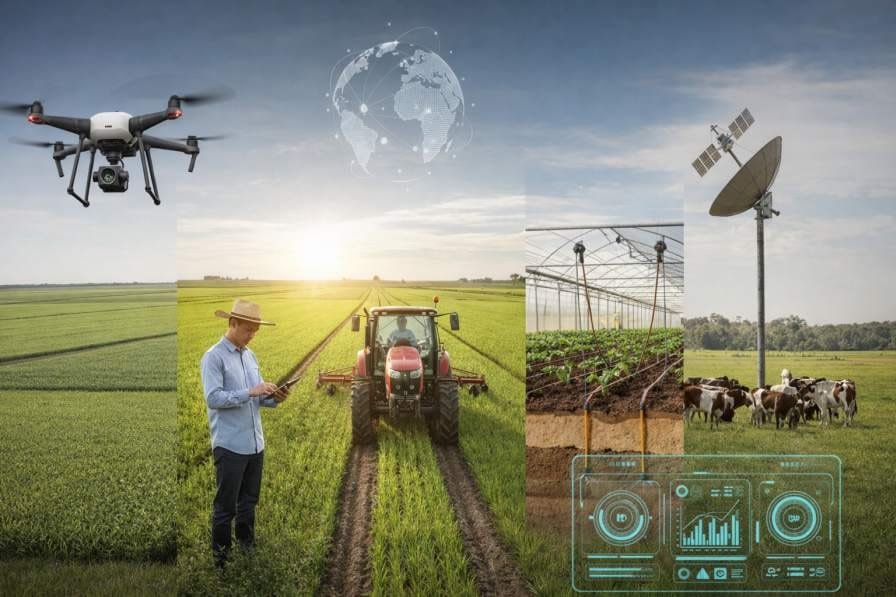
Smart farming uses information, digital technology, sensors, machinery, and data to help farmers make better decisions. Instead of relying only on visual observation or traditional schedules, farmers can use information about soil, weather, crops, water and other conditions to decide what action may be needed.Smart farming does not mean replacing farmers with machines. Instead, its purpose is to give farmers better information and tools so that they can manage their farms more efficiently.
What Is Smart Farming?
Smart farming is an approach to agriculture that combines technology, data and good farming practices to improve decision-making and resource management.It can include technologies such as:
- Sensors
- GPS
- Satellite imagery
- Drones
- Weather information
- Internet of Things (IoT)
- Precision agriculture
- Digital farm-management systems
- Automated machinery
- Data analysis
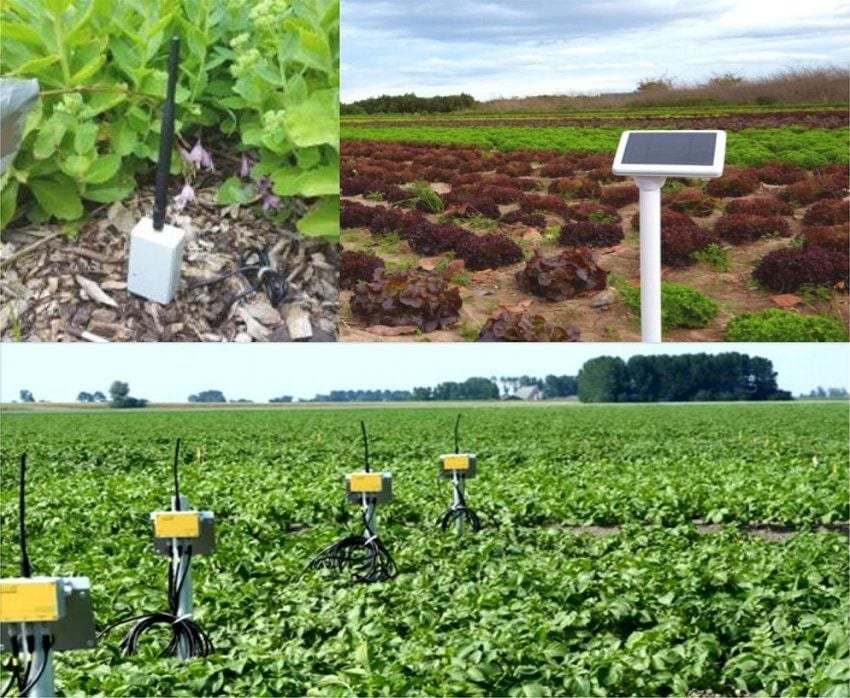
Smart farming is therefore not one specific machine or software program. It is a wider system in which different technologies can work together.For example, a farmer may use a soil-moisture sensor to understand how wet the soil is, weather information to check the possibility of rain, and a digital irrigation system to decide when watering is needed.
FAO describes smart farming as a combination of sustainable practices, efficient input use and data-driven technologies, including IoT, artificial intelligence and precision tools, to support better farm management.The technology can be simple or advanced. A farmer checking weather information on a smartphone is using a different level of technology from a large farm operating autonomous machinery, but both can be part of smart agriculture.
How Does Smart Farming Work?
Although smart-farming systems can be complicated, the basic idea is simple.
- Information is collected: Information can come from sensors, satellites, drones, weather stations, farm machinery, field observations and other sources.
- Data is analyzed: The information is organized and interpreted so that it becomes useful to the farmer.
- Farmers receive useful information: The system may show whether soil is dry, whether a crop area appears stressed, or whether weather conditions may affect a farming operation.
- Farmers make decisions: The farmer uses this information together with experience and local knowledge to decide what should be done.
- Farm activities are adjusted: This could mean changing irrigation, applying fertilizer to a specific area, inspecting a crop, or changing the timing of field work.
- Results are monitored: The farmer can then observe what happened and use the new information to improve future decisions.
Consider irrigation as a simple example. Instead of watering an entire field on a fixed schedule, a farmer could use soil-moisture information and weather conditions to determine whether irrigation is actually needed.This approach can help avoid unnecessary use of water, although results depend on the technology, crop, soil, climate and management.
The Technologies Behind Smart Farming
Smart farming uses many technologies, each serving a different purpose.
- Sensors: Sensors can measure conditions such as soil moisture, temperature, humidity and other environmental factors.
This information can help farmers understand what is happening in their fields without needing to inspect every location manually. - GPS: Global Positioning System (GPS) technology helps determine the location of farm machinery and other equipment.
GPS can support field mapping, navigation and precision operations. - Internet of Things: The Internet of Things, or IoT, refers to connected devices that can collect and exchange information.
In agriculture, sensors and other devices can send information to computers or mobile platforms where farmers can view it. - Satellite imagery: Satellites can provide images and other information about large agricultural areas.
Farmers and agricultural organizations can use this information to monitor crop conditions, land use and environmental changes. - Drones: Drones can fly over fields and capture images from above.
These images may help identify areas that appear different from the rest of a field, such as places experiencing crop stress. - Precision agriculture: Precision agriculture focuses on managing different parts of a farm according to their specific conditions rather than treating the whole field exactly the same way.
For example, a farmer may apply different amounts of fertilizer or water in different areas based on soil and crop conditions. - Digital farm-management systems: Digital platforms can bring information together in one place and help farmers track crops, inputs, field activities, weather and other information.
- Automation: Some agricultural equipment can perform tasks with limited human intervention. Examples include automated irrigation systems, robotic equipment and increasingly advanced agricultural machinery.
- Artificial intelligence and data analysis: AI can be used to analyze large amounts of agricultural information, identify patterns or provide decision support.
However, AI is only one part of smart farming. Smart agriculture also depends on sensors, connectivity, data quality, machinery, farm knowledge and practical farming methods.
How Sensors and Farm Data Help Farmers
- Farmers cannot see everything happening in a large field at the same time.
- Sensors and data can provide information about conditions that might otherwise be difficult to observe.
- For example, soil-moisture sensors can indicate whether soil is becoming dry. Temperature and humidity sensors can provide information about environmental conditions. Weather systems can provide information about rainfall, temperature and other factors.
- This information can help farmers identify potential problems earlier and decide where attention may be needed.
- Data can also help farmers compare conditions over time. A farmer may be able to see whether soil moisture is falling faster than expected or whether a particular part of a field repeatedly experiences problems.
- However, sensors are not a guarantee of higher yields. The information is useful only when it is accurate and properly interpreted.
- Technology works best when it supports farmers rather than replacing their judgement.
How Smart Farming Improves Water and Fertilizer Use
- Water and fertilizer are two important agricultural inputs, and using them efficiently can be important for both farm costs and environmental management.
- Smart farming can help farmers make more targeted decisions.
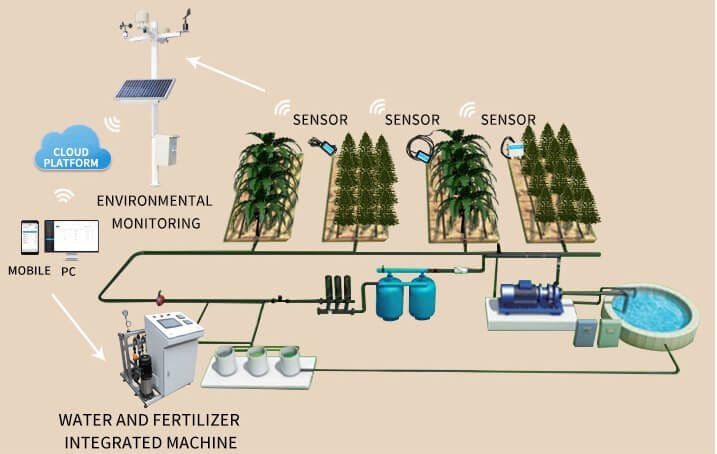
- For irrigation, information from soil-moisture sensors and weather forecasts can help indicate when crops may need water.
- For fertilizer, soil information, crop conditions and precision equipment can help identify where nutrients may be needed.
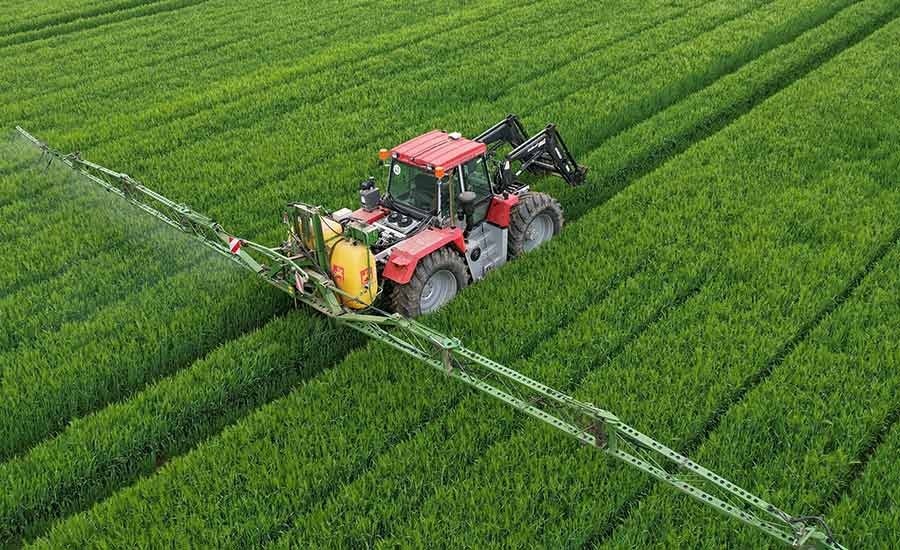
- One related method is variable-rate application. Instead of applying the same amount of an input across an entire field, equipment can apply different rates in different locations.
- This can reduce unnecessary input use when conditions allow, although the effectiveness depends on the quality of the information and the farming system.
- FAO’s 2026 smart-farming work highlights technologies designed to optimize water, fertilizer, pesticides, energy and other inputs while supporting soil, land and ecosystem health.
- Smart technology, however, cannot compensate for poor farming practices. Soil management, crop selection, irrigation methods and local knowledge remain important.
How Drones, Satellites and GPS Are Changing Farming
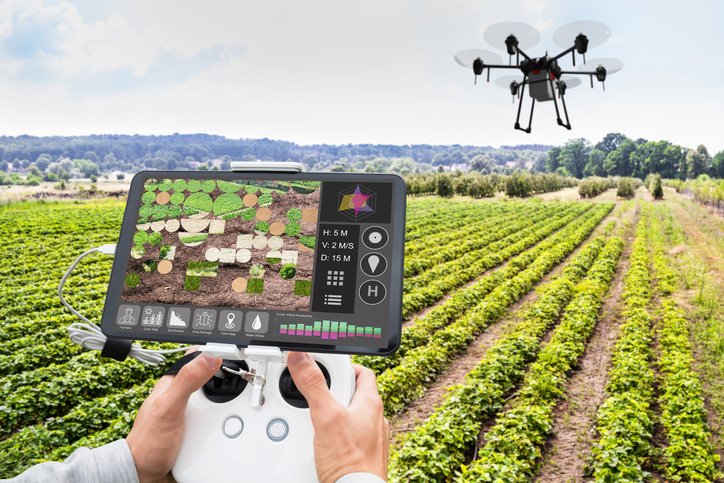
Modern farms can cover large areas, making it difficult to inspect every part of a field manually.
Drones and satellites provide additional ways to observe agricultural land.
- Crop monitoring: Images can help show differences in crop growth across a field.
- Field mapping: GPS and satellite information can help create detailed maps of agricultural land.
- Identifying stressed areas: Changes in crop appearance may indicate areas that require closer inspection.
- Monitoring irrigation: Remote information can help farmers observe whether areas of a field may be receiving different amounts of water.
- Planning farm operations: Location data can help farmers plan machinery movement and field activities.
- Navigation: GPS-guided machinery can help equipment follow planned paths more accurately.
These technologies can give farmers a broader view of their fields, but they do not eliminate the need for physical inspection and practical knowledge. - Smart Farming and Crop Health: Crop health can change because of pests, diseases, nutrient problems, water shortages, temperature stress and other factors.
- Smart-farming tools can help farmers detect signs of stress and identify areas that may require attention.
- Drones and satellite imagery can reveal visible differences between healthy and stressed parts of a field. Sensors can provide information about soil and environmental conditions. Digital monitoring systems can combine information from several sources.
- This can support earlier investigation and more targeted treatment.
- Technology, however, does not eliminate agricultural pests or diseases. A farmer still needs to identify the actual cause of a problem and decide what action is appropriate.
- The main advantage is that technology can help farmers find problems sooner and focus their attention where it is most needed.

How Smart Farming Helps Farmers Deal With Climate Change
- Climate change is making agricultural planning more difficult in many regions.
- Farmers may face irregular rainfall, heat, droughts, floods and other weather-related risks.
- Smart farming can support climate resilience by providing better information.
- Weather data can help farmers plan activities. Soil monitoring can help improve water management. Crop monitoring can help identify stress. Digital systems can also provide early warnings or help farmers choose appropriate timing for certain operations.
- FAO has recently emphasized the role of data and technology in building more resilient agricultural systems while using natural resources more efficiently.
- However, technology alone cannot solve climate change or all agricultural problems.
- Smart farming needs to work together with practices such as soil conservation, efficient irrigation, crop diversification, appropriate crop selection and local agricultural knowledge.
Smart Farming Around the World
Smart farming is developing differently in different regions because farmers face different needs, climates, infrastructure and economic conditions.
Asia
Asia has become an important area for agricultural technology and digital innovation. At FAO’s first Global Conference on Smart Farming in July 2026, examples from Asia and the Pacific included efforts to scale technologies and improve their usefulness for small-scale farmers.
In India, for example, the World Bank reported in August 2026 that farmers are using smartphone-based digital tools to receive advice related to crops, pests, weather, markets and government support.
Europe
European agricultural research and innovation programs are exploring precision agriculture, digital decision-support systems, automation and other technologies designed to improve efficiency and sustainability.
North America
Large farms in North America have adopted technologies such as GPS-guided machinery, precision equipment, sensors and digital farm-management systems.
Africa
Smart and digital agriculture are also being explored across Africa. FAO’s Digital Villages Initiative includes pilot activities in countries such as Ghana, Kenya, Liberia, Malawi, Niger, Nigeria, Senegal, Somalia and Zimbabwe, using digital technologies for productivity, climate-smart agriculture and market access.
Latin America and the Caribbean
FAO has highlighted smart-farming experiences from Peru, Bolivia and the regional Digital Villages initiative, where data, innovation and capacity development are being used to support better decisions and resource management.
Middle East and North Africa
Digital tools are increasingly being explored in the Near East and North Africa for agricultural practices, market access, finance, mechanization and advisory services. At the same time, FAO identifies barriers such as weak rural infrastructure, limited connectivity, affordability and digital-skills gaps.
These examples show that smart farming is not one global model. Successful systems need to be adapted to local conditions.
How Smart Farming Can Help Small-Scale Farmers
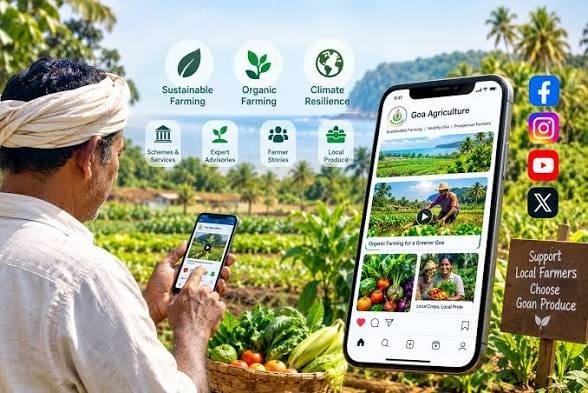
- Small-scale farmers are an important part of global food production, yet many have limited access to expensive machinery and advanced technologies.
- For this reason, affordable digital tools can be especially important.
- A farmer may not need a highly automated farm to benefit from digital agriculture. A smartphone, reliable weather information, a simple agricultural advisory service or a low-cost sensor can already provide useful information.
- FAO’s Smart Farming approach focuses on affordable technologies, good agricultural practices and efficient resource management for small-scale farmers. Its programs have been implemented in Uzbekistan and Vietnam and are being replicated in Honduras and Zambia.
However, several barriers remain.
These include:
- Cost of technology
- Limited internet access
- Lack of digital skills
- Electricity limitations
- Lack of training
- Limited technical support
This is why smart farming should be designed around farmers’ actual needs instead of assuming that every farmer has access to advanced digital infrastructure.
The Economic Benefits and Costs of Smart Farming
Smart farming can create economic opportunities, but technology also comes with costs.
Possible benefits include:
- Better resource management
- Reduced waste of some farm inputs
- Improved planning
- Better risk management
- Potential productivity improvements
- Easier access to information
- Improved connections to markets
At the same time, farmers may need to pay for:
- Sensors
- Machinery
- Software
- Connectivity
- Installation
- Maintenance
- Training
- Technical support
The economic result will differ from one farm to another.
A technology that makes sense on a large farm may be too expensive for a small farm. Similarly, a system that works well in a region with reliable internet and electricity may be difficult to operate where those services are limited.For this reason, affordable digital tools can be especially important.
FAO emphasizes that scaling smart farming requires viable investments, accessible services, strong innovation ecosystems and business models that fit local conditions.
Challenges and Limitations of Smart Farming
Smart farming has significant potential, but it also has limitations.
- High initial costs: Some systems require expensive equipment, software or machinery.
- Limited connectivity: Digital tools depend on communication networks, which may be weak or unavailable in some rural areas.
- Technical skills: Farmers need training to understand and use some technologies effectively.
- Data privacy and ownership: Digital farming creates large amounts of data, raising questions about who controls, stores and uses that information.
- Equipment maintenance: Sensors, computers, machinery and communication systems can fail and require maintenance.
- Electricity dependence: Some systems depend on reliable electricity for sensors, communications, charging, pumps or automated equipment.
- Different conditions between farms: A technology developed for one crop or region may not work equally well somewhere else.
- Unequal access: Better-funded farms may adopt advanced technologies faster than farmers with fewer financial resources.
- FAO’s 2026 analysis highlights barriers including digital skills, infrastructure, connectivity, affordability and the need for policies that make smart agriculture more inclusive.
- For this reason, smart farming should be seen as a tool, not as a universal solution.
Smart Farming vs Traditional Farming
| Factor | Smart Farming | Traditional Farming |
|---|---|---|
| Decision-making | Uses data and technology alongside farmer knowledge | Relies more heavily on experience, observation and established practices |
| Data use | Often uses sensors, weather data, satellite information and digital records | May use less digital data |
| Water management | Can support more targeted irrigation decisions | Often relies more on schedules and direct observation |
| Fertilizer management | Can support precise or variable application | Often applies inputs according to broader field conditions |
| Crop monitoring | Can use drones, satellites and sensors | Often relies more on regular field inspection |
| Equipment | Can include connected or automated machinery | Usually relies more on manually operated machinery |
| Initial cost | Can be relatively high depending on technology | Varies widely |
| Technical knowledge | Requires some digital and technical skills | Relies more heavily on farming skills and field experience |
| Scalability | Digital systems can be expanded across large areas | Large-scale production is also possible but may rely on conventional equipment and methods |
The comparison does not mean that smart farming should replace traditional farming.
In practice, many farmers can combine traditional knowledge with modern technology.
A farmer’s experience of local soil, weather and crops can be just as important as data from a sensor or satellite.
The Future of Smart Farming
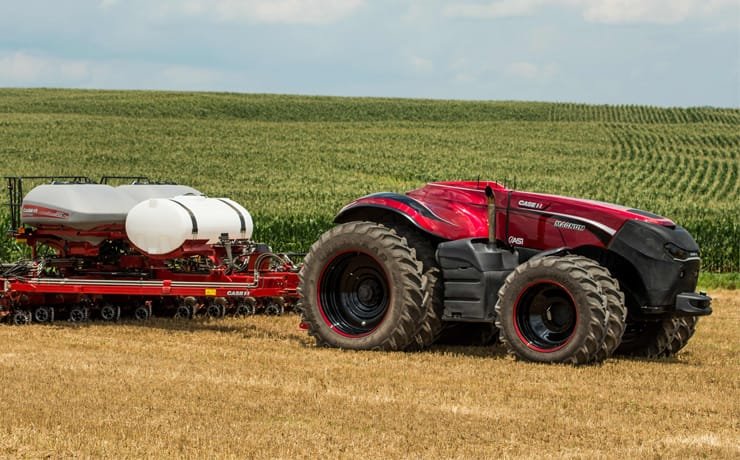
Smart farming is likely to continue developing as digital tools become more capable and, in some cases, more affordable.
Possible developments include:
- More accurate sensors
- Lower-cost agricultural technologies
- Better satellite information
- Improved weather forecasting
- Autonomous agricultural machinery
- More advanced farm-management platforms
- More efficient irrigation systems
- Renewable-energy-powered agricultural equipment
- Better digital services for small-scale farmers
Some of these technologies already exist, while others are still developing.
One recent example is CropSuit, launched by FAO in July 2026. The free web-based tool combines soil, climate, topography, land-cover and other environmental information to help identify crops that may be better suited to specific locations.
The future of smart farming will not depend only on technology. It will also depend on affordability, training, infrastructure, farmer participation, reliable data and appropriate policies.
Conclusion: How Technology Is Changing the Future of Agriculture
Smart farming is changing the way agricultural information can be collected, understood and used.
Sensors can provide information about soil and environmental conditions. Drones and satellites can help farmers observe large areas. GPS can support field mapping and machinery navigation. Digital platforms can bring information together, while precision agriculture can help farmers manage inputs more selectively.These technologies can support better decisions, more efficient resource use and improved resilience. But they also have costs and limitations.
Smart farming cannot replace farmers, eliminate all agricultural risks, or work in exactly the same way everywhere.Its greatest potential may come from combining technology with farmer experience, scientific knowledge and good agricultural practices.As agriculture faces pressure from water scarcity, climate change, rising costs and growing food demand, smart farming could become an increasingly important part of how food is produced around the world.
Frequently Asked Questions About Smart Farming
- What is smart farming?
Smart farming is an approach that uses technology, data and improved management practices to help farmers make better decisions and use agricultural resources more efficiently. - How does smart farming work?
It generally involves collecting information, analyzing it, using the results to support decisions, adjusting farm activities and monitoring the results. - What technologies are used in smart farming?
Common technologies include sensors, GPS, satellites, drones, IoT devices, digital platforms, precision equipment, automated machinery and data-analysis tools. - How do sensors help farmers?
Sensors can provide information about conditions such as soil moisture, temperature and humidity. This information can help farmers monitor their fields and make better decisions. - Can smart farming save water?
It can help farmers use water more efficiently by providing better information about soil moisture, weather and crop conditions. The actual result depends on the technology and farming system. - Can small farmers use smart farming?
Yes. Smart farming does not always require expensive machinery. Smartphones, weather services, digital advisory tools and affordable sensors can also provide useful support. - Is smart farming expensive?
Some technologies are expensive, while others are relatively affordable. Costs depend on the type of technology, farm size, infrastructure and maintenance requirements. - How do drones help agriculture?
Drones can capture images of fields from above, helping farmers identify differences in crop conditions, monitor areas of concern and support field management. - What is precision agriculture?
Precision agriculture is an approach that uses information and technology to manage different parts of a field according to their specific conditions rather than treating the entire field exactly the same way. - Can smart farming help with climate change?
Smart farming can support climate adaptation by improving weather information, water management, crop monitoring and timing of farm activities. However, technology alone cannot solve climate change.
References
- Food and Agriculture Organization of the United Nations (FAO), Global Conference on Smart Farming: Leveraging Data and Technology for Sustainable Agrifood Systems.: https://share.google/1Xrd7NnyplkGnQKsS
- FAO, Smart Farming — approach focused on affordable technologies, good practices and efficient resource management for small-scale farmers.: https://share.google/QaH2luRZR8hX3WElf
- FAO, FAO Global Conference on Smart Farming — global context, resource pressures and the role of data and technology. https://share.google/sh9QZoyAKVaxrP4qQ
- FAO, Asia and the Pacific’s agricultural innovations take centre stage at the FAO Global Conference on Smart Farming.: https://share.google/5MYCxWw5VoczFz3lA
- World Bank, Small AI Transforms Farming in India, August 2026.: https://share.google/d0le3JeVNP9BOyvHa
Thank You for Visiting
Visit again & again…!
Have a Nice Day….

